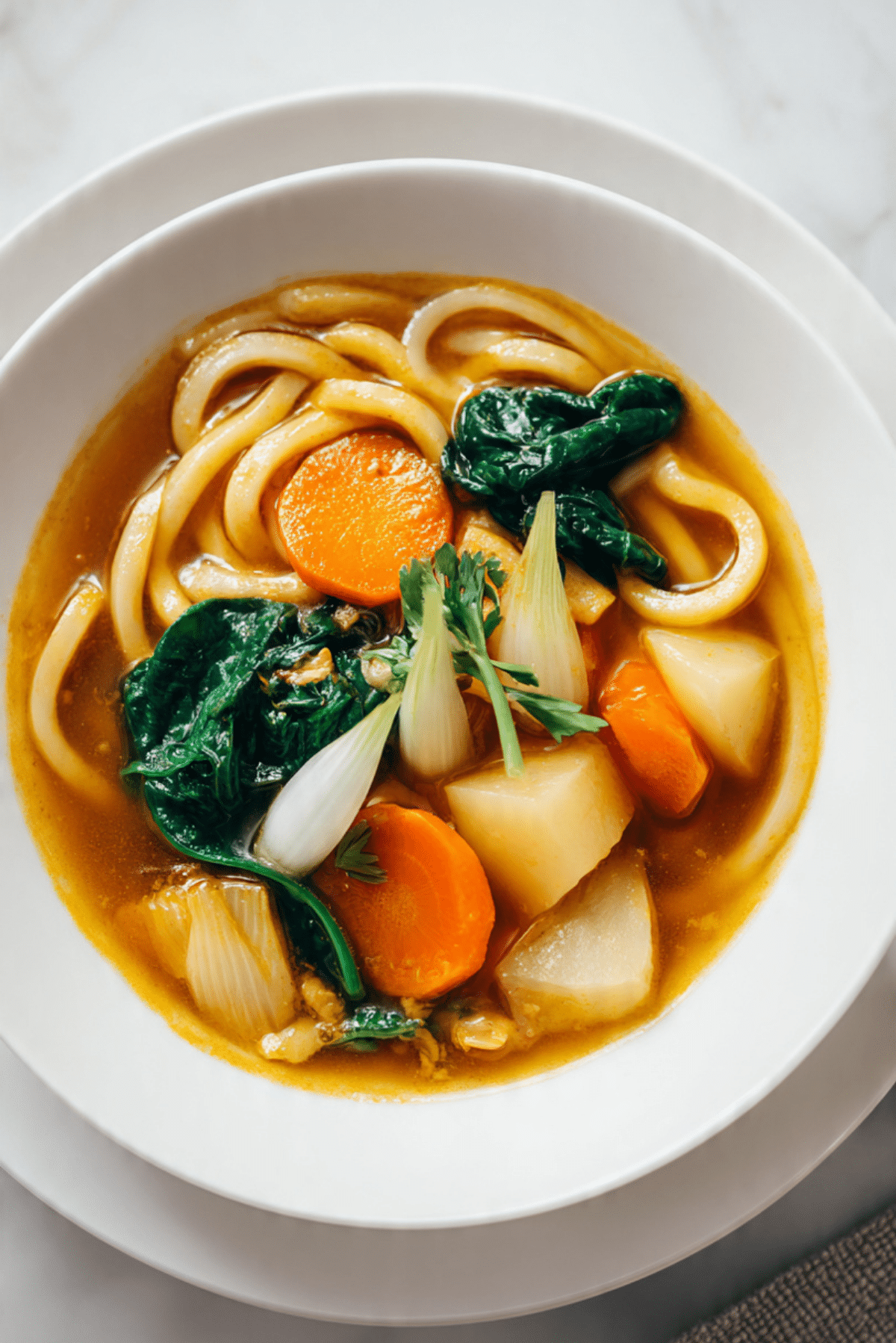
Curry Udon
There’s nothing quite like wrapping your hands around a warm bowl of curry udon. The thick, chewy noodles soak up all the rich, aromatic curry broth, while tender vegetables swirl through each spoonful. It’s comfort food at its finest, combining the deep, savory notes of Japanese curry with the heartiness of a noodle soup that hugs you from the inside out.
Behind the Recipe
I still remember the first time I tasted curry udon on a rainy day in Tokyo. Steam fogged the windows of the tiny shop, and as the bowl landed in front of me, I was instantly comforted by its warmth and smell. Since then, this dish has become my go-to when I need a little coziness, a little spice, and a lot of satisfaction. It’s simple, but every bite is packed with memories and joy.
Recipe Origin or Trivia
Curry udon is a fusion of two Japanese favorites: udon noodles and Japanese curry. Japanese curry itself was introduced during the Meiji era, adapted from British-style curries. Udon, with its thick wheat flour noodles, has been around for centuries. Put them together, and you’ve got a hybrid dish that became popular in the mid-20th century, especially in colder regions of Japan. It’s now a staple in homes and noodle shops alike.
Why You’ll Love Curry Udon
This bowl of goodness has a little something for everyone. Let me break it down for you.
Versatile: Easily switch up the vegetables or add protein like tofu or chicken if you’d like.
Budget-Friendly: Uses pantry staples and affordable ingredients.
Quick and Easy: Ready in just about 30 minutes from start to finish.
Customizable: Spice it up, tone it down, add toppings or keep it classic.
Crowd-Pleasing: Everyone loves a warm, flavorful noodle dish.
Make-Ahead Friendly: The broth deepens in flavor overnight.
Great for Leftovers: Just reheat and slurp again the next day.
Chef’s Pro Tips for Perfect Results
Getting curry udon just right takes a few tricks I’ve learned over time.
- Use fresh or frozen udon noodles for that chewy, satisfying texture.
- Sauté onions first to bring out their natural sweetness before adding the broth.
- Don’t overcook the vegetables they should be tender but not mushy.
- Use Japanese curry roux blocks for that authentic deep, slightly sweet flavor.
- Let the curry broth simmer a few minutes before adding the noodles to intensify the taste.
Kitchen Tools You’ll Need
No need for anything fancy. Just these basics will do.
Large Pot: For simmering your curry broth and cooking the vegetables.
Medium Saucepan: To cook or warm up the udon noodles separately.
Knife and Cutting Board: For prepping your veggies.
Ladle: To pour that golden broth over your noodles with care.
Chopsticks or Tongs: Great for placing and adjusting the noodles in the bowl.
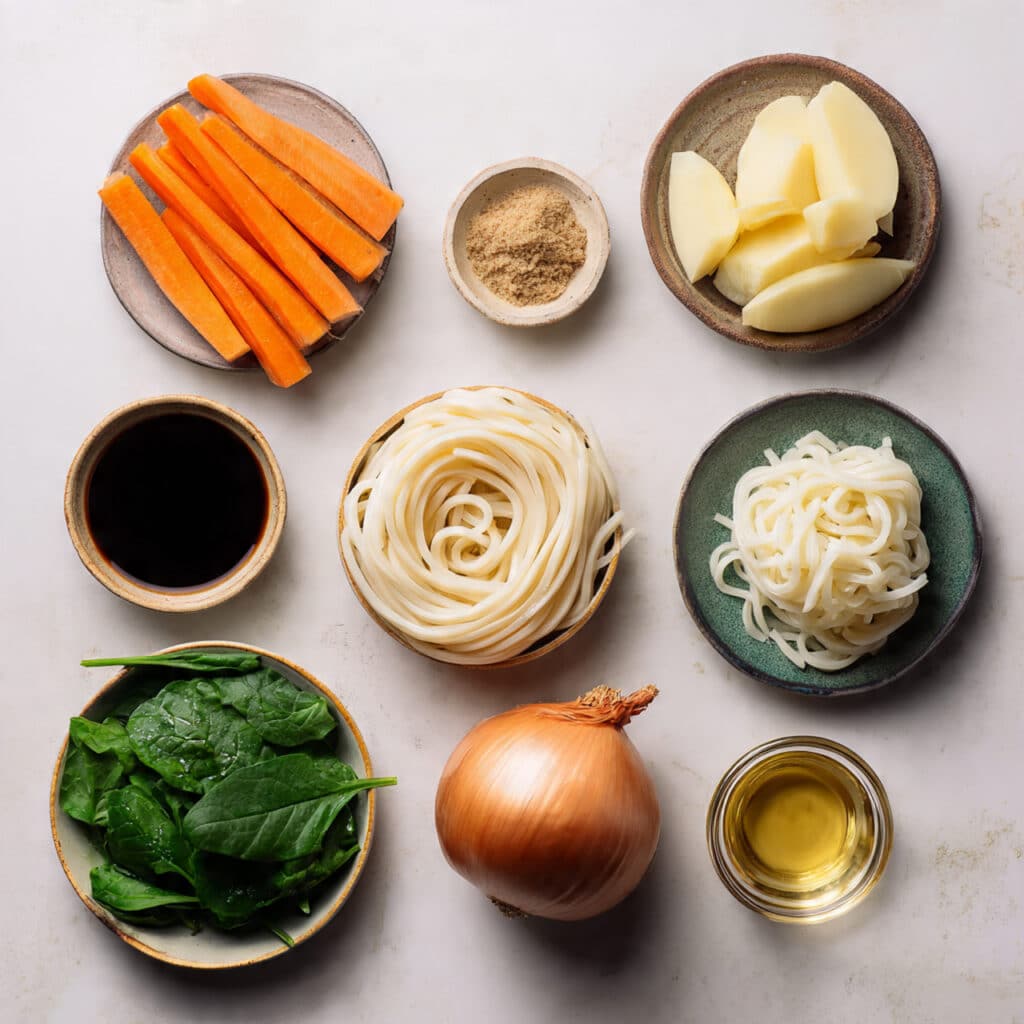
Ingredients in Curry Udon
Each ingredient brings comfort and balance. Here’s what you’ll need.
- Udon Noodles: 2 portions, either frozen or fresh. These thick noodles soak up all the curry flavor while staying satisfyingly chewy.
- Carrot: 1 large, peeled and sliced into rounds. Adds natural sweetness and color.
- Potato: 1 medium, peeled and diced. Gives heartiness and texture to the broth.
- Onion: 1 large, thinly sliced. Sautéed to release sweetness and depth.
- Spinach: 1 cup fresh, added at the end for a pop of green and soft texture.
- Japanese Curry Roux: 2 blocks, classic medium-hot. Melts into the broth and creates that rich, velvety curry flavor.
- Soy Sauce: 1 tablespoon. Balances the sweetness with umami.
- Dashi Broth: 3 cups. The base of the soup, packed with umami.
- Oil: 1 tablespoon vegetable oil. For sautéing the onions and vegetables.
Ingredient Substitutions
Make it your own with these easy swaps.
Udon Noodles: Soba or ramen can work in a pinch.
Japanese Curry Roux: Use homemade curry mix if you don’t have blocks.
Dashi Broth: Substitute with chicken or vegetable broth.
Spinach: Try bok choy or napa cabbage instead.
Soy Sauce: Tamari or coconut aminos for a gluten-free option.
Ingredient Spotlight
Japanese Curry Roux: These concentrated flavor blocks are made from curry powder, flour, and oil, giving curry udon its signature thick texture and mild spice.
Udon Noodles: Thick, smooth, and wonderfully chewy, udon noodles are the heart of this dish. They hold the broth beautifully and offer a comforting bite.
Instructions for Making Curry Udon
Here’s how we bring everything together for that soul-soothing bowl.
- Preheat Your Equipment:
Heat a large pot over medium heat and get your saucepan ready for the noodles. - Combine Ingredients:
Add oil to the pot and sauté the onions until they turn translucent. Add carrots and potatoes, then pour in the dashi broth. Simmer until veggies are tender. - Prepare Your Cooking Vessel:
While the broth is simmering, cook the udon noodles in a separate saucepan according to package instructions. Drain and set aside. - Assemble the Dish:
Once the vegetables are soft, turn the heat to low and stir in the curry roux blocks until fully dissolved. Add soy sauce and stir gently. - Cook to Perfection:
Simmer the curry broth for 5–7 more minutes, allowing it to thicken and develop flavor. - Finishing Touches:
Stir in fresh spinach and let it wilt gently in the hot broth. - Serve and Enjoy:
Place noodles in serving bowls, ladle the hot curry broth and vegetables over the top, and enjoy right away while it’s warm and fragrant.
Texture & Flavor Secrets
Curry udon delivers a beautiful contrast: silky, chewy noodles against tender vegetables, all swimming in a rich, thick broth that balances sweetness, spice, and umami. The spinach gives it a fresh finish, while the soy sauce grounds everything with depth.
Cooking Tips & Tricks
- Slice your carrots and potatoes evenly so they cook at the same rate.
- Use frozen udon noodles for best texture they hold up better than dried.
- Don’t skimp on the curry roux. It’s where all the magic happens.
- Add a soft-boiled egg on top for extra richness and protein.
What to Avoid
- Overcooking the noodles: They can get mushy quickly, so watch the timing.
- Using too much water: Stick to the broth measurements or the curry will be thin.
- Skipping the sauté: Onion flavor is much better when sautéed first.
- Letting spinach boil too long: Add it at the end so it stays vibrant and fresh.
Nutrition Facts
Servings: 2
Calories per serving: 420
Note: These are approximate values.
Preparation Time
Prep Time: 10 minutes
Cook Time: 20 minutes
Total Time: 30 minutes
Make-Ahead and Storage Tips
You can prepare the curry broth a day ahead and store it in the fridge. The flavors actually deepen overnight. Just reheat gently and cook fresh udon noodles when ready to serve. Leftovers keep well for 2–3 days in an airtight container, and you can also freeze the broth separately if needed.
How to Serve Curry Udon
Serve it in deep bowls with chopsticks and a soup spoon. Top with sliced green onions, a sprinkle of shichimi togarashi, or a soft-boiled egg if you’re feeling extra fancy. A side of pickled vegetables makes a great crunchy contrast.
Creative Leftover Transformations
- Curry Udon Stir-Fry: Toss the leftovers in a hot pan for a thicker, saucier noodle dish.
- Curry Rice Bowl: Pour the leftover curry over steamed rice for a comforting variation.
- Noodle Soup Add-On: Add more broth and create a light curry noodle soup with new veggies.
Additional Tips
- Warm your serving bowls beforehand to keep the soup hotter longer.
- If you prefer more heat, add a small spoon of chili oil before serving.
- Taste the broth before serving and adjust with soy sauce if needed.
Make It a Showstopper
Garnish with a swirl of sesame oil, finely chopped green onions, or even crispy shallots. A few thin chili slices can add vibrant color and heat. Presentation matters just as much as flavor.
Variations to Try
- Tofu Curry Udon: Add cubes of fried tofu for a plant-based protein.
- Seafood Curry Udon: Add shrimp or scallops to the broth for a coastal twist.
- Creamy Curry Udon: Stir in a splash of coconut milk for a silky texture.
- Spicy Curry Udon: Use a spicy curry roux or add fresh chilies.
- Mushroom Udon: Include shiitake or enoki mushrooms for earthy depth.
FAQ’s
Q1: Can I use dried udon noodles?
A1: Yes, but the texture won’t be as chewy as fresh or frozen ones.
Q2: Is curry udon vegetarian?
A2: It can be if you use vegetable broth and ensure your curry roux is plant-based.
Q3: Can I freeze curry udon?
A3: Freeze the curry broth separately, and cook fresh noodles when reheating.
Q4: What kind of curry roux should I use?
A4: Medium-hot or mild Japanese curry blocks like Golden Curry or Vermont Curry work well.
Q5: Can I make this gluten-free?
A5: Yes, use gluten-free udon and tamari instead of soy sauce.
Q6: How can I make it spicier?
A6: Add chili oil, fresh chili slices, or use a spicy curry roux.
Q7: What can I use instead of dashi?
A7: A good-quality vegetable or chicken broth will still be flavorful.
Q8: How do I keep noodles from getting soggy?
A8: Cook them separately and add to the bowl just before serving.
Q9: Can I add protein?
A9: Absolutely try tofu, chicken, or even shrimp.
Q10: How do I store leftovers?
A10: Keep the noodles and curry broth separate in the fridge for best texture.
Conclusion
Curry udon is a hug in a bowl, full of bold flavor, cozy textures, and heartwarming memories. Whether you’re looking for a quick weeknight dinner or a comforting meal to soothe your soul, this dish delivers every time. Trust me, you’re going to love this.
Print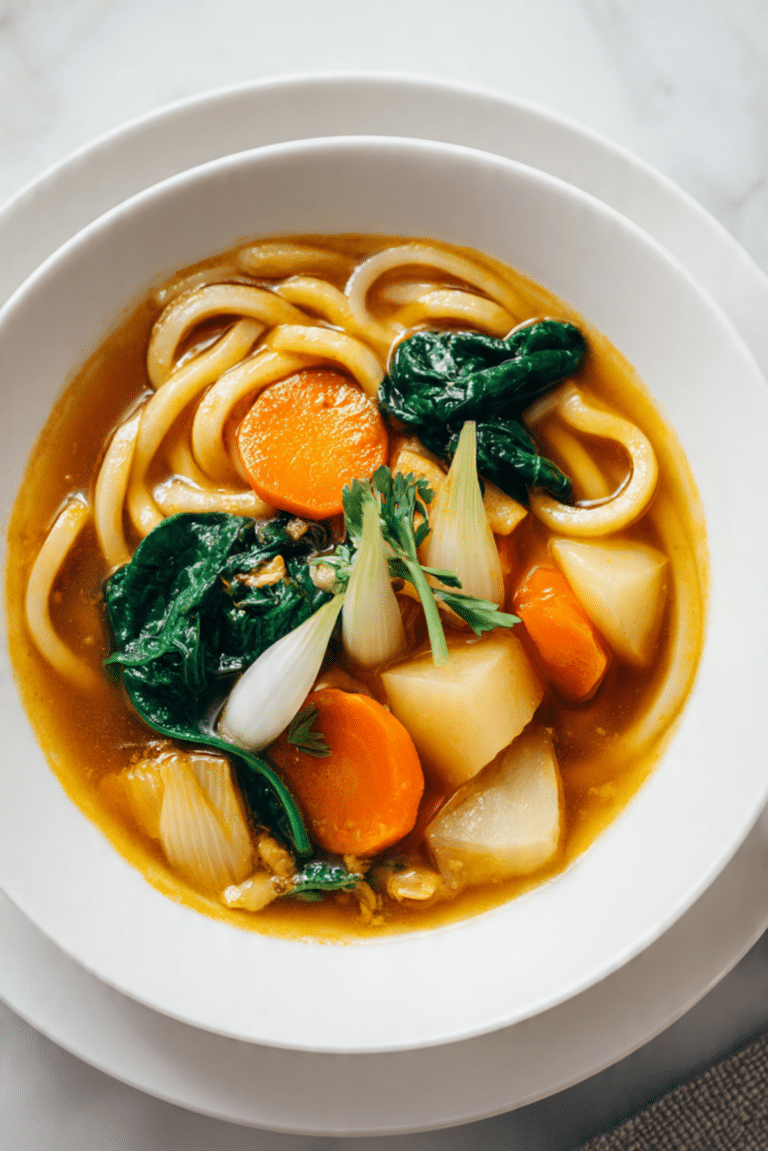
Curry Udon
A warm and comforting bowl of Japanese curry udon featuring thick chewy noodles, tender vegetables, and a rich curry broth.
- Total Time: 30 minutes
- Yield: 2 servings 1x
Ingredients
- 2 portions udon noodles (fresh or frozen)
- 1 large carrot, peeled and sliced
- 1 medium potato, peeled and diced
- 1 large onion, thinly sliced
- 1 cup fresh spinach
- 2 blocks Japanese curry roux (medium-hot)
- 1 tablespoon soy sauce
- 3 cups dashi broth
- 1 tablespoon vegetable oil
Instructions
- Heat a large pot over medium heat and sauté onions in vegetable oil until translucent.
- Add carrots and potatoes to the pot, then pour in the dashi broth. Simmer until vegetables are tender.
- In a separate saucepan, cook the udon noodles according to package instructions. Drain and set aside.
- Reduce the heat and stir in the curry roux blocks until fully dissolved. Add soy sauce and stir well.
- Simmer the curry broth for an additional 5–7 minutes to thicken.
- Add fresh spinach to the broth and let it wilt gently.
- Divide cooked noodles between serving bowls, ladle the curry broth and vegetables over the top, and serve immediately.
Notes
- Use frozen udon for better texture and faster prep.
- Add a soft-boiled egg or green onions for extra toppings.
- Adjust curry thickness by simmering longer or adding more roux.
- Prep Time: 10 minutes
- Cook Time: 20 minutes
- Category: Main Course
- Method: Stovetop
- Cuisine: Japanese
- Diet: Vegetarian
Nutrition
- Serving Size: 1 bowl
- Calories: 420
- Sugar: 6g
- Sodium: 980mg
- Fat: 12g
- Saturated Fat: 3g
- Unsaturated Fat: 8g
- Trans Fat: 0g
- Carbohydrates: 64g
- Fiber: 5g
- Protein: 10g
- Cholesterol: 0mg
Keywords: curry udon, Japanese noodle soup, vegetarian curry udon, comfort food, quick Japanese dinner