Korean Fire Cabbage
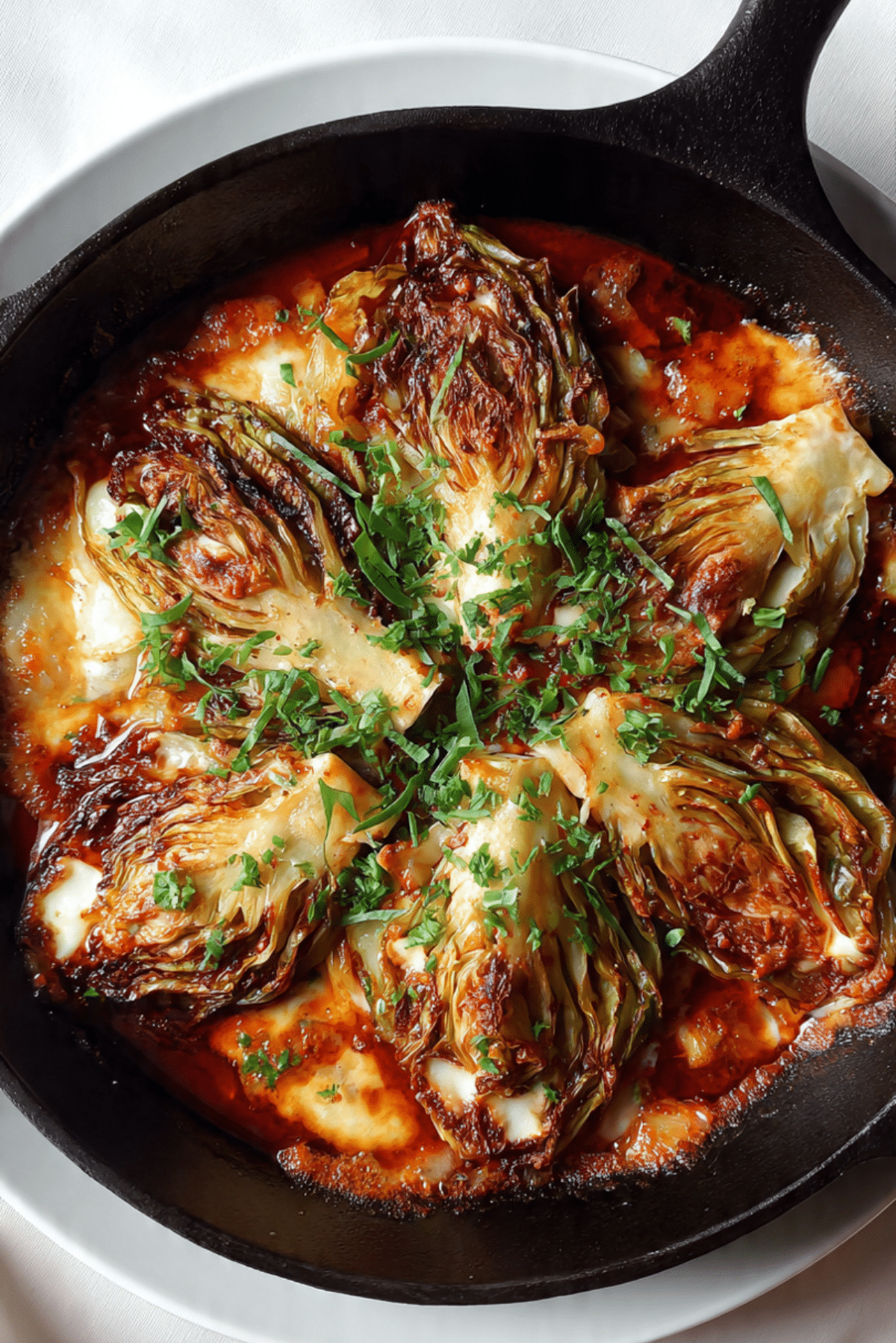
This Korean Fire Cabbage is one of those dishes that surprises you in all the best ways. Charred, tender cabbage soaked in a fiery, umami-packed sauce and finished with melty cheese and fresh herbs it’s comforting, bold, and absolutely unforgettable. The edges get crispy, the centers stay juicy, and that spicy tomato-chili base ties everything together in a way that feels like a warm hug with a little kick.
Behind the Recipe
The first time I made this dish, it was on a cold evening when I was craving something hearty but different. I had half a cabbage left in the fridge, a few pantry staples, and just enough time to let it roast while I curled up with a book. The result? A bubbling pan of cabbage, charred on top, tender inside, and packed with smoky, spicy flavor. Ever since, it’s been my go-to when I want to wow people with a vegetable dish that eats like a main.
Recipe Origin or Trivia
Cabbage has long been a staple in Korean cuisine, especially in the form of kimchi. But this twist? It takes cues from Korean fire chicken (buldak), known for its spicy gochujang-based sauce, and reimagines it as a comforting vegetable bake. Combining Western roasting techniques with the bold Korean flavor profile gives this dish its unique fusion identity. Think of it as the love child of a cheesy casserole and a fiery Korean street food snack.
Why You’ll Love Korean Fire Cabbage
There’s a lot to adore here. This dish doesn’t just taste good it hits all the right notes in flavor, texture, and versatility.
Versatile: Serve it as a vegetarian main or a spicy side alongside rice, noodles, or protein.
Budget-Friendly: Uses humble ingredients like cabbage, tomato paste, and pantry staples.
Quick and Easy: Minimal prep, one pan, and the oven does most of the work.
Customizable: Adjust the spice level or swap in your favorite cheese or herbs.
Crowd-Pleasing: That sizzling, melty top always gets a “wow” at the table.
Make-Ahead Friendly: Assemble it earlier in the day and just bake before serving.
Great for Leftovers: Even better the next day, heated up with a runny egg on top.
Chef’s Pro Tips for Perfect Results
Here are a few secrets to help you nail it every time:
- Char the cabbage just right: Don’t be afraid to roast until the edges are dark. That deep browning adds flavor and texture.
- Use a cast iron skillet: It helps crisp the bottom and evenly cooks the layers.
- Gochujang is key: Don’t substitute it this fermented chili paste brings the signature depth.
- Layer the cheese late: Add the cheese halfway through so it melts without burning.
- Garnish with fresh herbs: Chives or scallions give it that final bright pop.
Kitchen Tools You’ll Need
This dish keeps things simple in terms of tools:
Cast Iron Skillet: Ideal for heat retention and oven-to-table serving.
Sharp Knife: For slicing the cabbage into clean wedges.
Mixing Bowl: To blend your sauce ingredients.
Tongs: For handling the cabbage without tearing the leaves.
Oven Mitts: That pan gets seriously hot.
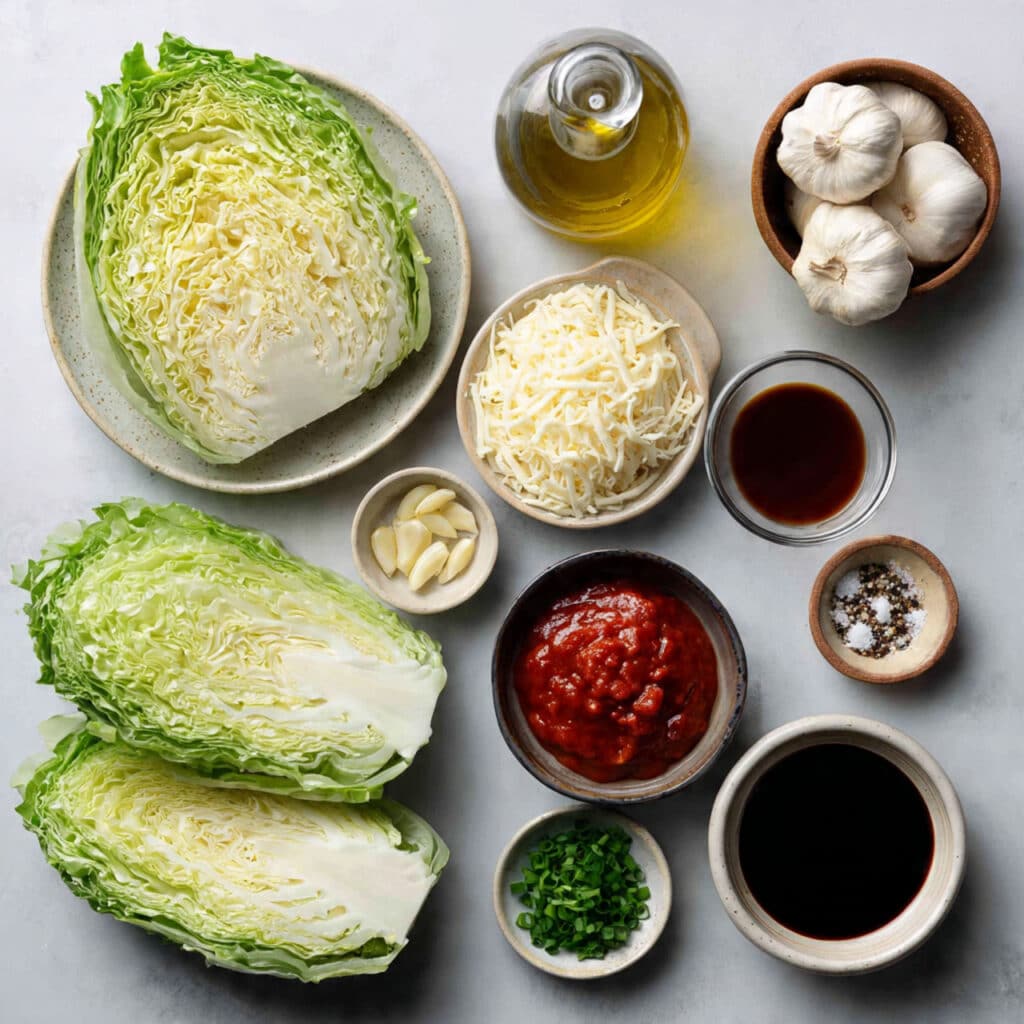
Ingredients in Korean Fire Cabbage
The ingredients in this dish work in perfect harmony bringing spice, depth, and balance.
- Green Cabbage: 1 medium head, cut into wedges. The star of the show, it softens and chars beautifully.
- Gochujang: 2 tablespoons. Adds a deep, spicy-sweet flavor that defines the dish.
- Tomato Paste: 1 tablespoon. Builds a rich, tangy base for the sauce.
- Soy Sauce: 1 tablespoon. Adds umami and saltiness.
- Garlic: 3 cloves, minced. Infuses the dish with sharp, savory flavor.
- Sesame Oil: 1 tablespoon. Brings a nutty aroma and finish.
- Vegetable Oil: 1 tablespoon. Helps with roasting and browning.
- Mozzarella Cheese: 1 cup, shredded. Melts over the top for creamy, stretchy goodness.
- Chives or Scallions: 2 tablespoons, chopped. Adds a fresh, oniony crunch.
- Salt and Pepper: To taste. Balances and enhances the flavors.
Ingredient Substitutions
Want to tweak the recipe? Here are some simple swaps:
Gochujang: Sriracha mixed with a little miso paste.
Mozzarella: Try Monterey Jack, provolone, or a dairy-free meltable cheese.
Soy Sauce: Use tamari or coconut aminos for a gluten-free version.
Sesame Oil: A touch of olive oil with a sprinkle of sesame seeds.
Chives: Use fresh parsley or thinly sliced scallions.
Ingredient Spotlight
Gochujang: This Korean chili paste is thick, spicy, and slightly sweet, thanks to fermented soybeans and glutinous rice. It’s what gives the dish that signature heat and richness.
Cabbage: Humble but hearty, cabbage transforms under high heat. The outer layers crisp while the core stays tender, soaking in every bit of sauce.
Instructions for Making Korean Fire Cabbage
Making this dish feels like a creative ritual. Here’s how to bring it all together:
- Preheat Your Equipment: Set your oven to 425°F (220°C) and place a cast iron skillet inside to heat.
- Combine Ingredients: In a bowl, mix gochujang, tomato paste, soy sauce, minced garlic, sesame oil, and a pinch of salt and pepper. Stir until smooth.
- Prepare Your Cooking Vessel: Carefully remove the hot skillet, drizzle in vegetable oil, and swirl to coat.
- Assemble the Dish: Arrange the cabbage wedges cut side up in the skillet. Spoon the sauce generously over and between each piece.
- Cook to Perfection: Roast for 20 minutes uncovered, then sprinkle cheese on top and roast for another 10 minutes until bubbling and golden.
- Finishing Touches: Scatter chopped chives or scallions over the top while still hot.
- Serve and Enjoy: Bring the whole skillet to the table. Serve hot with steamed rice or crusty bread.
Texture & Flavor Secrets
This dish is all about contrast. The outer leaves turn crisp and smoky, while the inner layers soften and soak in all that spicy, tangy sauce. The melted cheese adds richness, and the herbs on top cut through with freshness. Every bite offers a little crunch, a lot of comfort, and a punch of bold Korean flavor.
Cooking Tips & Tricks
Here’s how to make it even easier and better:
- Always preheat your skillet for that perfect sear on the cabbage.
- Don’t skimp on the sauce it’s the soul of the dish.
- Slice your cabbage into thick wedges so they hold their shape.
- For extra spice, add a pinch of red pepper flakes on top before roasting.
What to Avoid
Avoid these common pitfalls to get the best results:
- Don’t overcrowd the pan give the cabbage room to roast.
- Avoid adding cheese too early, or it may burn.
- Don’t under-season. Taste the sauce before adding to adjust salt and spice.
Nutrition Facts
Servings: 4
Calories per serving: 230
Note: These are approximate values.
Preparation Time
Prep Time: 10 minutes
Cook Time: 30 minutes
Total Time: 40 minutes
Make-Ahead and Storage Tips
This dish is excellent for planning ahead. You can prep the sauce and cut the cabbage in advance, storing both in the fridge. After baking, leftovers will keep well in an airtight container for up to 3 days. Reheat in the oven for best texture, or microwave for a quick fix. You can even freeze portions and reheat for a cozy meal anytime.
How to Serve Korean Fire Cabbage
Serve this dish straight from the skillet for maximum visual impact. It pairs beautifully with a bowl of hot steamed rice, a side of kimchi, or even some pan-fried tofu. You could also spoon it over noodles or grain bowls for a spicy, savory upgrade.
Creative Leftover Transformations
Give your leftovers a fresh twist:
- Chop and fold into fried rice with a scrambled egg.
- Use as a spicy topping for baked potatoes.
- Blend into a spicy veggie soup base.
- Turn into a spicy quesadilla filling with extra cheese.
Additional Tips
- Use parchment under the cabbage if you’re worried about sticking.
- Try adding a sprinkle of toasted sesame seeds before serving.
- Don’t forget to taste your sauce before roasting adjust the salt or heat to your liking.
Make It a Showstopper
To really impress, garnish with finely sliced red chili or a drizzle of chili oil. Serve it bubbling hot, right from the oven, with fresh herbs sprinkled over. The contrast of golden cheese, vibrant sauce, and green herbs is a feast for the eyes.
Variations to Try
- Vegan Fire Cabbage: Use dairy-free cheese and double up on the sauce.
- Add Protein: Toss in cubed tofu or chickpeas before roasting.
- Extra Crunch: Top with toasted panko before baking.
- Cheesy Upgrade: Mix in a bit of sharp cheddar for added depth.
- Sweet and Spicy: Add a drizzle of honey or maple syrup to the sauce.
FAQ’s
Q1: Can I make this less spicy?
A1: Yes! Reduce the gochujang and add a bit of tomato sauce or ketchup to mellow it out.
Q2: What type of cabbage works best?
A2: Green cabbage is perfect because it holds its shape well and gets beautifully tender.
Q3: Can I use a baking dish instead of a skillet?
A3: Absolutely. Just make sure it’s oven-safe and large enough to fit the wedges without crowding.
Q4: Is this dish gluten-free?
A4: It can be—just use gluten-free soy sauce or tamari.
Q5: How do I reheat leftovers?
A5: Reheat in the oven at 350°F until warm, or use the microwave for convenience.
Q6: Can I freeze Korean Fire Cabbage?
A6: Yes, freeze in airtight containers for up to a month. Thaw and reheat in the oven.
Q7: What cheese works besides mozzarella?
A7: Monterey Jack, provolone, or even a bit of feta for tang.
Q8: What if I don’t have gochujang?
A8: Mix a little sriracha with miso paste and a touch of honey for a quick alternative.
Q9: Can I make this in advance?
A9: Yes, assemble the dish and refrigerate until ready to bake.
Q10: Is this spicy for kids?
A10: It can be, but you can easily adjust the spice level by using less gochujang.
Conclusion
Korean Fire Cabbage is one of those dishes that turns humble ingredients into something magical. It’s spicy, cheesy, and full of soul. Whether you’re serving it to wow guests or cozying up solo, trust me, you’re going to love this. It’s bold, it’s comforting, and it’s worth every bite.
Print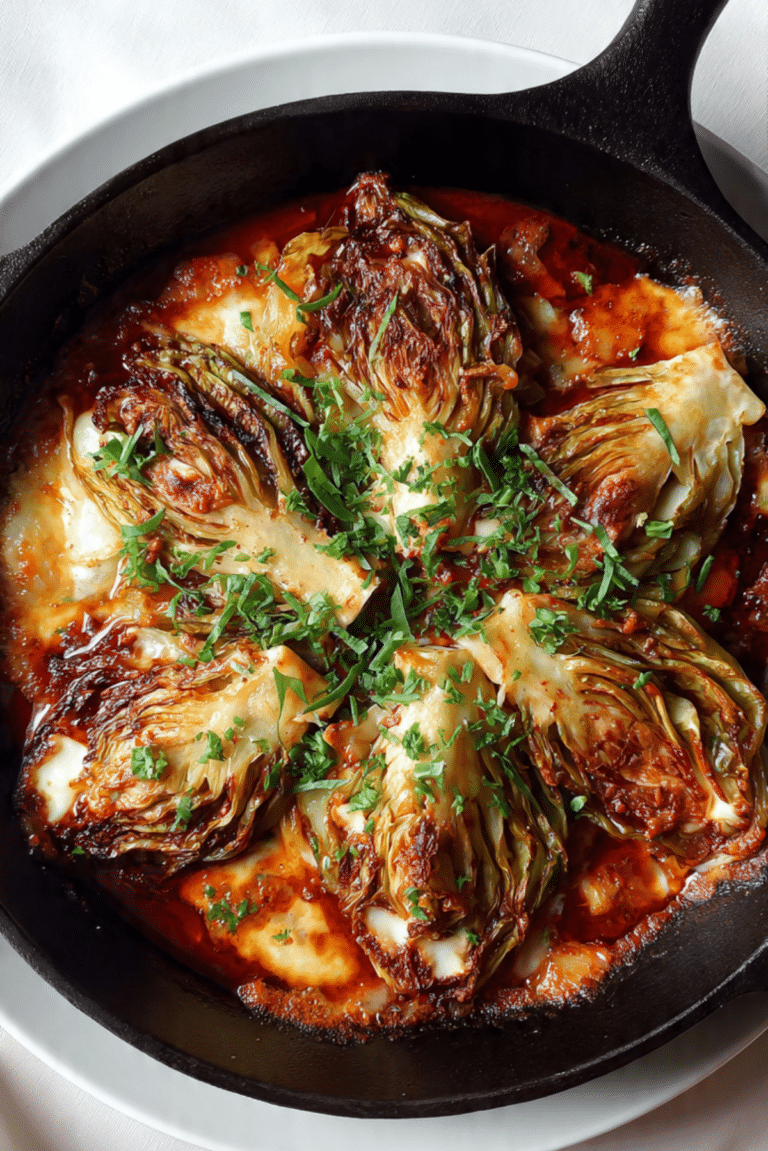
Korean Fire Cabbage
Korean Fire Cabbage is a spicy, cheesy baked cabbage dish with tender, charred wedges in a flavorful gochujang and tomato sauce, topped with melted cheese and fresh herbs for a comforting and bold meal.
- Total Time: 40 minutes
- Yield: 4 servings
Ingredients
- Green Cabbage: 1 medium head, cut into wedges
- Gochujang: 2 tablespoons
- Tomato Paste: 1 tablespoon
- Soy Sauce: 1 tablespoon
- Garlic: 3 cloves, minced
- Sesame Oil: 1 tablespoon
- Vegetable Oil: 1 tablespoon
- Mozzarella Cheese: 1 cup, shredded
- Chives or Scallions: 2 tablespoons, chopped
- Salt and Pepper: To taste
Instructions
- Preheat oven to 425°F (220°C) and place a cast iron skillet inside to heat.
- In a bowl, mix gochujang, tomato paste, soy sauce, minced garlic, sesame oil, and a pinch of salt and pepper until smooth.
- Carefully remove the hot skillet, drizzle in vegetable oil, and swirl to coat.
- Arrange the cabbage wedges cut side up in the skillet. Spoon the sauce generously over and between each piece.
- Roast for 20 minutes uncovered, then sprinkle cheese on top and roast for another 10 minutes until bubbling and golden.
- Scatter chopped chives or scallions over the top while still hot.
- Serve hot with steamed rice or crusty bread.
Notes
- Preheat your skillet for perfect sear on cabbage.
- Adjust spice level by reducing or increasing gochujang.
- Slice cabbage into thick wedges to hold shape.
- Reheat leftovers in the oven for best texture.
- Garnish with sesame seeds or extra herbs for added flavor.
- Prep Time: 10 minutes
- Cook Time: 30 minutes
- Category: Main Dish
- Method: Baking
- Cuisine: Korean
- Diet: Vegetarian
Nutrition
- Serving Size: 1/4 of recipe
- Calories: 230
- Sugar: 5g
- Sodium: 450mg
- Fat: 10g
- Saturated Fat: 5g
- Unsaturated Fat: 4g
- Trans Fat: 0g
- Carbohydrates: 28g
- Fiber: 5g
- Protein: 8g
- Cholesterol: 15mg
Keywords: Korean cabbage recipe, spicy baked cabbage, gochujang cabbage, cheesy cabbage bake, Korean vegetarian dish