Mango Sago
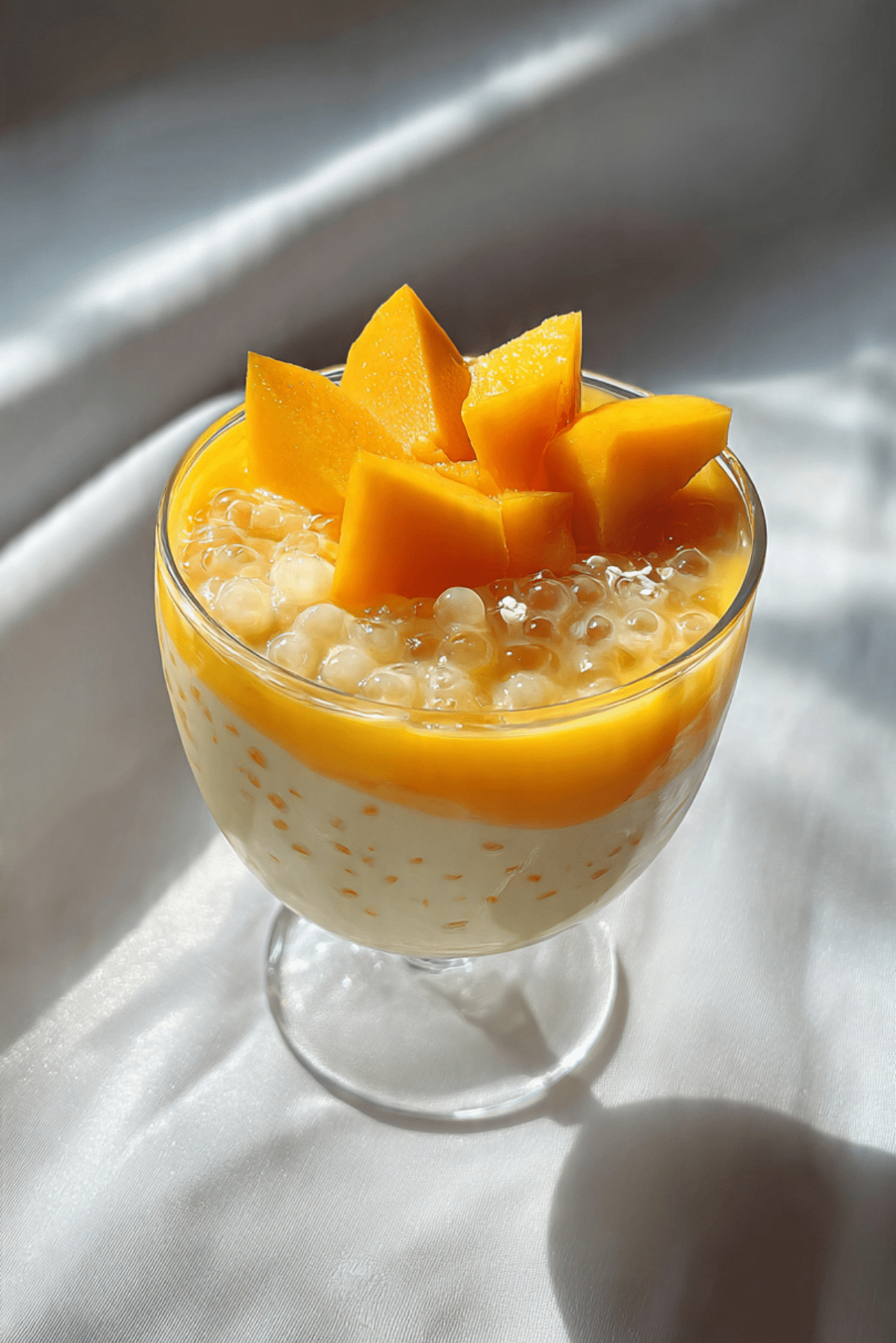
Imagine diving your spoon into a chilled glass layered with creamy coconut milk, juicy mango puree, and soft, chewy sago pearls. That first bite? A burst of tropical sweetness that melts into your mouth, followed by the gentle texture of the pearls and that rich, fragrant coconut finish. Mango Sago is one of those desserts that feels like sunshine in a cup cool, refreshing, and impossibly satisfying.
Behind the Recipe
I remember the first time I had Mango Sago. It was after a long, hot summer walk through the buzzing streets of Chinatown. I ducked into a tiny dessert shop, craving something cold and sweet. What I got was this dreamy, creamy glass of tropical bliss. Since then, it’s become my go-to dessert for warmer days or when I need a taste of something nostalgic and comforting.
Recipe Origin or Trivia
Mango Sago has its roots in Hong Kong-style desserts, inspired by a fusion of Chinese and Southeast Asian influences. The word “sago” refers to the tiny tapioca pearls made from starch extracted from tropical palm stems. These pearls have been used in Asian desserts for centuries. The mango twist likely emerged as a way to embrace the vibrant tropical fruits found across the region. Today, Mango Sago is a staple in many Asian dessert houses, especially in Singapore, Malaysia, and Taiwan.
Why You’ll Love Mango Sago
It’s more than just pretty layers. Here’s why this dessert wins hearts:
Versatile: You can make it with fresh or frozen mangoes, and swap in different fruit toppings.
Budget-Friendly: Only a handful of ingredients, and most are pantry staples or easily found at Asian markets.
Quick and Easy: Just cook the sago, blend the mango, and chill that’s it.
Customizable: Want it vegan? Just stick with coconut milk. Want it sweeter? Add condensed milk or syrup.
Crowd-Pleasing: Its beautiful presentation and tropical flavor make it a hit at gatherings.
Make-Ahead Friendly: Prepare it the night before and serve it chilled for best flavor.
Great for Leftovers: Keeps well in the fridge for a couple of days and tastes even better as it sits.
Chef’s Pro Tips for Perfect Results
To make this dessert absolutely irresistible, here’s what I’ve learned:
- Soak sago before boiling to reduce cooking time and improve texture.
- Rinse sago pearls under cold water after cooking to remove excess starch and prevent clumping.
- Use ripe, sweet mangoes like Ataulfo or Alphonso for the most vibrant flavor.
- Chill the dessert for at least 2 hours before serving for the creamiest result.
- Serve in clear glasses or jars to show off those stunning layers.
Kitchen Tools You’ll Need
All you need are a few simple tools to get started:
Small Pot: To cook the sago pearls evenly.
Strainer: Helps rinse and drain the sago after cooking.
Blender or Food Processor: To blend the mango into a smooth, luscious puree.
Mixing Bowls: For combining the coconut mixture and cooling ingredients.
Serving Glasses or Jars: To layer and present the dessert beautifully.
Ingredients in Mango Sago
What makes Mango Sago special is the way these ingredients blend and balance:
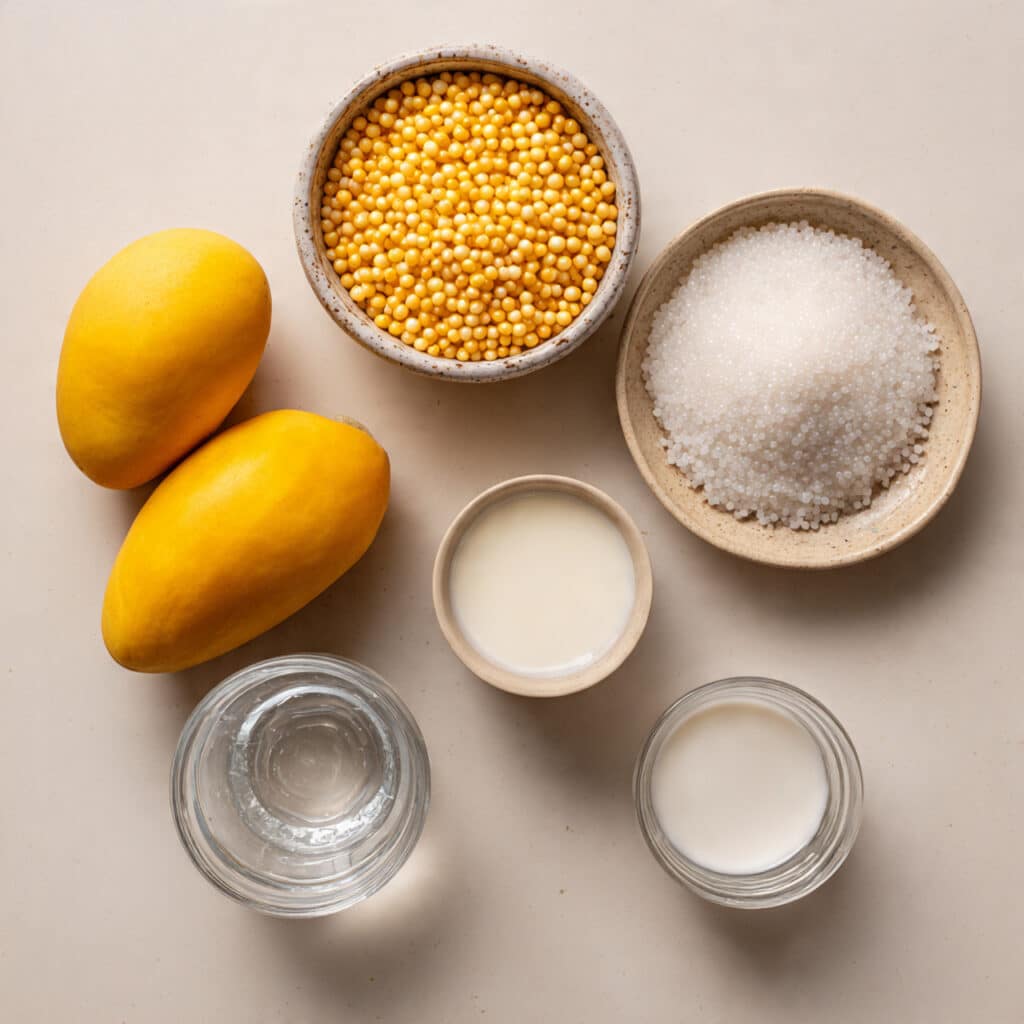
- Sago Pearls: ½ cup. Provides the chewy, fun texture that makes this dessert so satisfying.
- Ripe Mangoes: 2 large. Used for the puree and topping, delivering the sweet, tropical flavor.
- Coconut Milk: 1 cup. Adds a creamy, velvety base with a hint of nutty richness.
- Condensed Milk: ¼ cup (optional). Enhances sweetness and gives the dessert a thicker, richer taste.
- Sugar: 1 to 2 tablespoons (to taste). Sweetens the coconut mixture.
- Water: 4 cups (for boiling sago). Needed to cook the pearls until translucent.
- Ice Cubes (optional): For serving chilled immediately if not refrigerating.
Ingredient Substitutions
Need to work with what you have? No problem:
Sago Pearls: Small tapioca pearls.
Coconut Milk: Evaporated milk or almond milk for a lighter option.
Condensed Milk: Honey, maple syrup, or more sugar.
Ripe Mangoes: Frozen mango chunks or canned mango pulp.
Ingredient Spotlight
Sago Pearls: These tiny pearls are a classic Asian dessert staple. Once boiled, they become wonderfully chewy and slightly translucent perfect for adding texture.
Ripe Mangoes: A sweet, juicy mango can make or break this dessert. Look for soft, fragrant varieties like Ataulfo, Champagne, or Alphonso.
Instructions for Making Mango Sago
Let’s bring this tropical delight to life. Here are the steps you’re going to follow:
1. Preheat Your Equipment:
No preheating needed, but get your pots, blender, and bowls ready.
2. Combine Ingredients:
In a small pot, bring 4 cups of water to a boil. Add the sago pearls and simmer for 10-15 minutes, stirring occasionally, until they become mostly translucent. Turn off the heat and cover the pot for 5 more minutes.
3. Prepare Your Cooking Vessel:
Strain and rinse the sago under cold water to stop cooking and remove excess starch. Set aside in a mixing bowl.
4. Assemble the Dish:
Peel and dice the mangoes. Blend 1½ of them into a smooth puree. Dice the remaining half for topping. Mix coconut milk, condensed milk (if using), and sugar into the cooled sago. Stir in a few spoonfuls of mango puree if you like it extra fruity.
5. Cook to Perfection:
No cooking needed beyond the sago. Let the assembled components chill in the fridge for at least 2 hours.
6. Finishing Touches:
In serving glasses, layer mango puree at the bottom, then the sago coconut mixture, and finally diced mangoes on top.
7. Serve and Enjoy:
Serve chilled with a spoon, maybe even a mint leaf on top for flair.
Texture & Flavor Secrets
The magic of Mango Sago is in the contrast. You get:
- Creamy coconut richness
- Juicy, sweet mango chunks
- Bouncy, chewy sago pearls
- Chilled, smooth texture that melts on the tongue
Each spoonful feels like a mini tropical vacation.
Cooking Tips & Tricks
Here’s how to make sure your dessert turns out dreamy:
- Cook sago until mostly translucent, not fully they’ll finish in residual heat.
- Use chilled mangoes for a fresher taste.
- Chill all components separately before layering for clean, defined lines.
- Taste the coconut mixture before assembling to balance the sweetness.
What to Avoid
A few common pitfalls to watch out for:
- Overcooking sago they’ll turn mushy.
- Using unripe or sour mangoes the flavor won’t shine.
- Skipping the chill time warm Mango Sago just isn’t the same.
- Not rinsing the sago they’ll clump and become gummy.
Nutrition Facts
Servings: 4
Calories per serving: 280
Note: These are approximate values.
Preparation Time
Prep Time: 15 minutes
Cook Time: 15 minutes
Total Time: 30 minutes
Make-Ahead and Storage Tips
Mango Sago is a dream to prep ahead. You can cook the sago and puree the mango a day before. Store the components separately in the fridge and assemble just before serving. Leftovers keep well in the refrigerator for up to 2 days. Just give it a gentle stir before enjoying.
How to Serve Mango Sago
This dessert shines in clear glasses, mason jars, or dessert bowls. Top with extra mango chunks, a drizzle of coconut cream, or even a sprinkle of toasted coconut flakes. Want to go fancy? Add a mint sprig or serve with a mango slice on the rim.
Creative Leftover Transformations
Don’t toss the extra transform it:
- Blend into a smoothie with yogurt for a tropical breakfast.
- Freeze into popsicles for a fruity snack.
- Add chia seeds and enjoy as a next-day parfait.
Additional Tips
- Use a fine-mesh strainer for sago to avoid losing them down the sink.
- Adjust sweetness depending on mango ripeness.
- Add a drop of vanilla or pandan extract for a flavor twist.
Make It a Showstopper
Presentation matters. Use glasses that show off the layers, keep the top neat, and garnish with vibrant, juicy mango cubes. Serve cold, and always with a long spoon for that perfect scoop.
Variations to Try
- Lychee Mango Sago: Add canned lychees for a floral, juicy twist.
- Matcha Mango Sago: Stir matcha into the coconut layer for earthy contrast.
- Berries and Mango: Top with blueberries or strawberries for extra color.
- Vegan Mango Sago: Skip the condensed milk and add agave or maple syrup.
- Mango Pomelo Sago: A Hong Kong favorite add pomelo pulp for a citrus burst.
FAQ’s
Q1: Can I make this vegan?
A1: Absolutely! Just use coconut milk and sweeten with maple syrup or sugar.
Q2: Do I have to use fresh mango?
A2: No, you can use frozen mango or canned mango pulp in a pinch.
Q3: Can I use chia seeds instead of sago?
A3: Chia seeds give a different texture but work great for a pudding version.
Q4: How do I know when sago is cooked?
A4: When they turn mostly translucent with only a tiny white dot in the center, they’re ready.
Q5: Can I freeze Mango Sago?
A5: It’s not ideal, as freezing affects the texture. Best enjoyed fresh or chilled.
Q6: How sweet should it be?
A6: That’s up to you. Always taste and adjust the sweetness before chilling.
Q7: What’s the best coconut milk to use?
A7: Full-fat canned coconut milk gives the creamiest result.
Q8: Is this dessert gluten-free?
A8: Yes, it’s naturally gluten-free.
Q9: Can kids eat this?
A9: Definitely! It’s sweet, fruity, and fun for all ages.
Q10: What type of mango is best?
A10: Use ripe, fragrant varieties like Ataulfo, Champagne, or Alphonso for the best flavor.
Conclusion
Whether you’re beating the heat or craving something light yet indulgent, Mango Sago hits all the right notes. It’s fresh, fruity, creamy, and just so easy to love. Trust me, you’re going to want to keep this recipe on repeat it’s the kind of dessert that brings smiles with every spoonful.
Print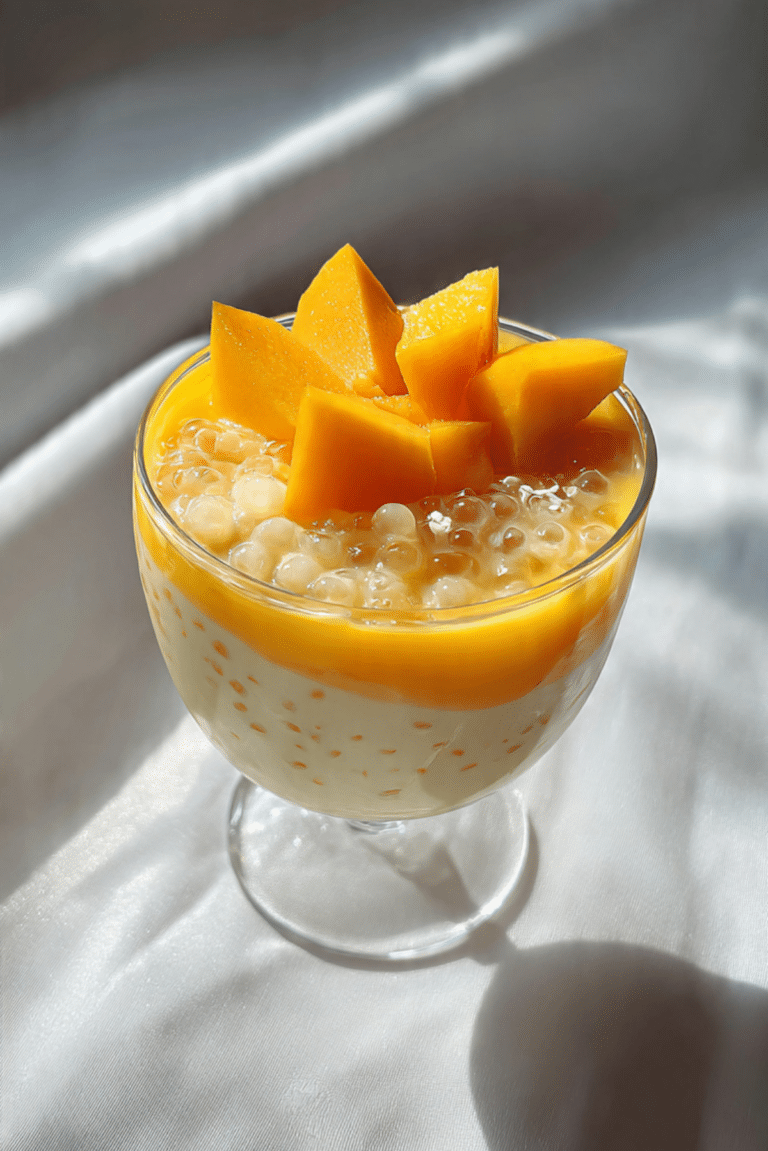
Mango Sago
A chilled tropical dessert made with creamy coconut milk, chewy sago pearls, and sweet mango puree layered into a refreshing and vibrant treat.
- Total Time: 30 minutes
- Yield: 4 servings 1x
Ingredients
- 1/2 cup sago pearls
- 2 large ripe mangoes
- 1 cup coconut milk
- 1/4 cup condensed milk (optional)
- 1 to 2 tablespoons sugar (to taste)
- 4 cups water (for boiling sago)
- Ice cubes (optional, for serving)
Instructions
- Bring 4 cups of water to a boil in a small pot. Add sago pearls and simmer for 10-15 minutes until mostly translucent, stirring occasionally.
- Turn off the heat, cover, and let sit for 5 minutes. Rinse under cold water and drain.
- Peel and dice mangoes. Blend 1½ mangoes into smooth puree. Dice the remaining for topping.
- In a bowl, mix coconut milk, condensed milk (if using), and sugar. Stir into the cooled sago pearls.
- Chill the sago mixture and mango puree for at least 2 hours.
- To serve, layer mango puree at the bottom of a glass, add sago coconut mixture, and top with diced mango.
Notes
- Use ripe mangoes like Ataulfo or Alphonso for the best flavor.
- Rinse sago thoroughly to avoid clumping.
- Chill ingredients separately before assembling for clean layers.
- Adjust sweetness based on mango ripeness.
- Prep Time: 15 minutes
- Cook Time: 15 minutes
- Category: Dessert
- Method: Boiling and layering
- Cuisine: Asian
- Diet: Vegetarian
Nutrition
- Serving Size: 1 glass
- Calories: 280
- Sugar: 18g
- Sodium: 15mg
- Fat: 10g
- Saturated Fat: 8g
- Unsaturated Fat: 2g
- Trans Fat: 0g
- Carbohydrates: 42g
- Fiber: 2g
- Protein: 2g
- Cholesterol: 5mg
Keywords: mango sago, mango dessert, coconut mango pudding, Asian dessert, tropical pudding