Honey Soy Miso Halibut
There is something quietly magical about a glossy piece of halibut resting over warm rice, especially when the glaze is sweet, savory, and deeply cozy all at once. The honey brings a soft golden shine, the soy sauce gives that salty depth, and the miso adds the kind of rich flavor that makes the kitchen smell like dinner is about to be very, very good.
This is the kind of dish that feels restaurant-worthy without asking you to do anything fussy. The fish turns tender and flaky, the sauce caramelizes just enough around the edges, and the green onions and sesame seeds finish everything with a fresh little pop. Trust me, you’re going to love this.
A Glossy, Cozy Fish Dinner That Feels Special Without the Stress
What makes this dish so lovely is the balance. Halibut is mild and buttery, so it welcomes bold flavors without getting lost underneath them. The glaze wraps around each piece like a silky little blanket, turning simple fish into something memorable.
And now let’s dive into why this plate works so well. You get soft rice, crisp-tender greens, flaky fish, and a sauce that is sweet, salty, savory, and lightly tangy. This one’s a total game-changer for weeknight dinners that still feel a little fancy.
A Little Miso Magic Behind the Plate
Miso has a long history in Japanese cooking, where it is loved for its deep umami flavor and comforting richness. It is made from fermented soybeans, and depending on the variety, it can taste mellow, salty, earthy, or slightly sweet.
Pairing miso with fish is a classic idea because it brings out the natural sweetness of seafood. Add honey and soy sauce, and the glaze becomes beautifully balanced, glossy, and full of character. It feels modern on the plate, but the flavors are rooted in a very comforting cooking tradition.
Why This Recipe Belongs in Your Dinner Rotation
Once you taste that first forkful, you understand why this dish is worth keeping close. It is simple enough for a regular evening but pretty enough to serve when you want dinner to feel thoughtful.
Versatile: You can serve it with rice, noodles, steamed greens, roasted vegetables, or even a crisp cucumber salad. The glaze works beautifully with many simple sides.
Budget-Friendly: Halibut can feel like a treat, but the remaining ingredients are pantry-friendly and used in small amounts. A little miso, honey, and soy sauce go a long way.
Quick and Easy: The marinade comes together in minutes, and the fish cooks fast. You get a polished dinner without spending the whole evening in the kitchen.
Customizable: You can make the glaze sweeter, tangier, or more savory depending on your mood. A small splash of rice vinegar or extra ginger changes the whole feel.
Crowd-Pleasing: The flavors are bold but not overwhelming, which makes this a great fish dish for people who usually hesitate around seafood.
Make-Ahead Friendly: The glaze can be mixed ahead, and the fish can marinate briefly before cooking. That makes dinner feel smoother when the day gets busy.
Great for Leftovers: Leftover fish flakes beautifully into rice bowls, wraps, salads, or quick noodle dishes the next day.
Chef Notes for Tender Fish and a Shiny Glaze
Before we start cooking, let me tell you, the secret here is gentle heat and not overthinking it. Halibut is lean, so it likes careful cooking and a little attention.
- Do not marinate too long: Miso and soy sauce are strong, so 20 to 30 minutes is plenty.
- Pat the fish dry first: This helps the glaze cling and keeps the fish from steaming too much.
- Use parchment or a lightly greased dish: The honey in the glaze can stick as it caramelizes.
- Watch the thickness: Thicker fillets may need a few extra minutes, while thinner pieces cook quickly.
- Finish with fresh toppings: Green onions and sesame seeds brighten the rich glaze beautifully.
Kitchen Tools You Will Need
Now that the flavor plan is set, let’s keep the tools simple. You do not need anything fancy here, just a few kitchen basics that help the fish cook evenly.
Small Mixing Bowl: For whisking the glaze until smooth and glossy.
Whisk or Fork: Helps blend the miso into the honey, soy sauce, and sesame oil.
Baking Dish: Keeps the fish snug while it bakes and catches the extra glaze.
Parchment Paper: Makes cleanup easier and helps prevent sticking.
Measuring Spoons: Useful because the glaze depends on balance.
Fish Spatula: Helps lift the tender halibut without breaking it apart.
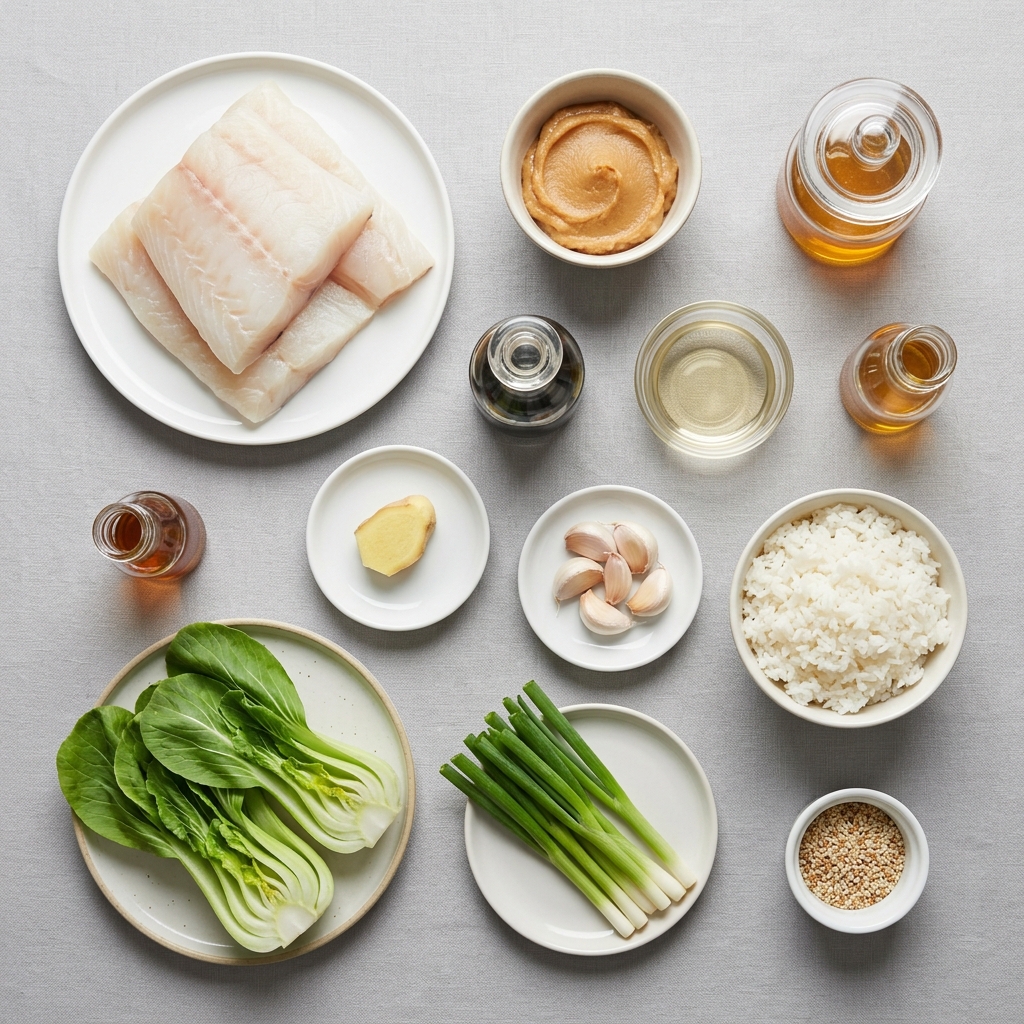
Ingredients You Will Need for This Sweet Savory Halibut
The beauty of this ingredient list is how each piece has a job. The miso gives depth, honey softens the saltiness, soy sauce sharpens the flavor, and ginger brings warmth that makes everything smell incredible.
- Halibut Fillets: 4 fillets, about 6 ounces each. Mild, firm, and flaky fish that holds the glaze beautifully.
- White Miso Paste: 3 tablespoons. Adds savory depth and that signature umami flavor.
- Honey: 2 tablespoons. Brings sweetness and helps the glaze turn glossy.
- Low Sodium Soy Sauce: 2 tablespoons. Adds salty balance without overpowering the fish.
- Rice Vinegar: 1 tablespoon. Brightens the glaze and keeps it from tasting too heavy.
- Toasted Sesame Oil: 1 teaspoon. Adds nutty aroma and richness.
- Fresh Ginger: 1 teaspoon, grated. Gives warmth and a fresh little kick.
- Garlic: 1 small clove, finely grated. Adds savory depth in the background.
- Cooked White Rice: 3 cups. Makes a soft, comforting base for the glazed fish.
- Bok Choy: 4 cups, steamed or quickly sautéed. Adds fresh green color and crisp-tender texture.
- Green Onions: 2 tablespoons, thinly sliced. Adds brightness at the end.
- Sesame Seeds: 1 teaspoon. Adds a light nutty crunch and a pretty finish.
Easy Ingredient Swaps That Still Taste Wonderful
And now, because real kitchens are never perfect little cooking shows, here are a few swaps that work well when you need them.
Halibut: Cod, sea bass, or salmon.
White Miso Paste: Yellow miso for a slightly stronger flavor.
Honey: Maple syrup for a deeper sweetness.
Low Sodium Soy Sauce: Tamari for a gluten free option.
Rice Vinegar: Fresh lime juice in a small amount.
Bok Choy: Broccolini, spinach, snap peas, or asparagus.
White Rice: Jasmine rice, brown rice, or cauliflower rice.
The Flavor Stars That Make It Shine
Every ingredient matters, but a couple of them really carry the flavor story here. These are the ones that make the dish taste layered instead of simply sweet and salty.
White Miso Paste: This is the heart of the glaze. It brings savory richness, gentle saltiness, and a deep cozy flavor that makes the fish taste more luxurious.
Honey: Honey smooths everything out and helps the glaze cling to the halibut. As it cooks, it creates that glossy finish that makes the plate look irresistible.
Let’s Cook This Beautiful Fish Dinner
Here are the steps you’re going to follow, and they are wonderfully simple. Mix the glaze, coat the fish, bake until flaky, then serve everything over rice with greens and a bright finishing touch.
- Preheat Your Equipment: Preheat the oven to 400°F. Line a baking dish with parchment paper or lightly grease it so the glaze does not stick.
- Combine Ingredients: In a small bowl, whisk together the white miso paste, honey, low sodium soy sauce, rice vinegar, sesame oil, grated ginger, and grated garlic until smooth.
- Prepare Your Cooking Vessel: Place the halibut fillets in the prepared baking dish, leaving a little space between each piece so they cook evenly.
- Assemble the Dish: Spoon the glaze over the fish, coating the tops and sides. Let the fish sit for 15 to 20 minutes so the flavors can settle in.
- Cook to Perfection: Bake for 10 to 14 minutes, depending on thickness, until the fish flakes easily with a fork and reaches 145°F in the center.
- Finishing Touches: Spoon a little pan glaze over the top, then sprinkle with sliced green onions and sesame seeds.
- Serve and Enjoy: Serve warm over cooked white rice with bok choy on the side. Let me tell you, it’s worth every bite.
How the Texture and Flavor Come Together
As the fish bakes, the glaze thickens gently and turns shiny over the surface. The honey helps it cling, while the miso deepens into something savory and warm. You get delicate flakes of fish under a smooth glaze, which is honestly the best kind of contrast.
The rice soaks up the extra sauce, the bok choy brings freshness, and the sesame seeds add a tiny crunch. Every bite feels balanced, soft, bright, and rich without being heavy.
Helpful Cooking Tips for the Best Results
Once you make this once, it becomes easy to repeat. Still, these little tricks help keep the fish tender and the glaze just right.
- Use center-cut fillets: They cook more evenly and stay moist.
- Do not skip the rice vinegar: It brightens the glaze and balances the honey.
- Check early: Halibut can dry out quickly, so start checking around 10 minutes.
- Spoon sauce over the fish before serving: It makes the final plate glossy and flavorful.
Common Mistakes to Avoid for Better Fish
This dish is forgiving, but a few small things can change the final texture. Here is what to watch for so dinner lands just right.
- Overcooking the fish: Pull it from the oven as soon as it flakes easily.
- Using too much salt: Low sodium soy sauce keeps the glaze balanced.
- Skipping parchment: The honey can stick to the pan as it cooks.
- Marinating for hours: The glaze is flavorful enough with a short rest.
Nutrition Facts and Serving Details
Servings: 4
Calories per serving: 395
Note: These are approximate values.
Timing for a Smooth Dinner
Prep Time: 20 minutes
Cook Time: 14 minutes
Total Time: 34 minutes
Make-Ahead and Storage Tips for Busy Days
If you want to make dinner easier, mix the glaze up to 2 days ahead and keep it covered in the refrigerator. Give it a quick stir before using because miso can settle a bit.
Cooked fish can be stored in an airtight container in the refrigerator for up to 2 days. Freezing is not my favorite choice for cooked halibut because the texture can become a little dry, but it can be frozen for up to 1 month if needed. Reheat gently in a covered dish at a low temperature, or warm it in short bursts in the microwave.
How to Serve This Glazed Halibut
This dish loves a soft base and something green beside it. White rice is classic and comforting, but jasmine rice, brown rice, or noodles also work beautifully.
For sides, try steamed bok choy, roasted asparagus, cucumber salad, sautéed snap peas, or simple carrots. A little extra green onion on top makes the whole plate feel fresh and polished.
Creative Leftover Ideas for Tomorrow
Leftovers are a gift here because the fish flakes into tender pieces that work in so many quick meals. Keep the flavors gentle so the glaze can still shine.
Turn leftovers into a rice bowl with cucumber, avocado, and extra sesame seeds. You can also tuck the fish into lettuce cups, fold it into warm noodles, or serve it over a crisp salad with a light soy ginger dressing.
Additional Tips for Flavor and Freshness
For the best flavor, use fresh ginger instead of powdered ginger. It gives the glaze a brighter aroma and a cleaner finish.
Also, let the fish rest for just a couple of minutes after baking. This helps the juices settle, and the glaze thickens slightly as it cools. It is a small pause, but it makes the final bite better.
Make It a Showstopper on the Plate
Presentation is easy with this one because the glaze already does half the work. Start with a scoop of rice, lay the bok choy slightly to one side, then place the fish right on top.
Spoon a little extra glaze over the fish, sprinkle sesame seeds in the center, and finish with green onions. Keep the plate clean and simple so the glossy fish stays the star.
Variations to Try Next Time
- Spicy Ginger Version: Add 1 teaspoon chili garlic sauce to the glaze for gentle heat.
- Citrus Miso Version: Add 1 teaspoon fresh orange zest for a brighter aroma.
- Salmon Style: Swap halibut for salmon and bake until just tender.
- Noodle Bowl Version: Serve over soba noodles with bok choy and cucumber.
- Extra Green Version: Add steamed snap peas, asparagus, or baby spinach to the bowl.
FAQ’s
Q1: Can I use frozen halibut?
A1: Yes, just thaw it fully in the refrigerator and pat it dry before adding the glaze.
Q2: How do I know when the fish is done?
A2: It should flake easily with a fork and reach 145°F in the thickest part.
Q3: Can I make the glaze ahead?
A3: Yes, mix it up to 2 days ahead and refrigerate it in a sealed container.
Q4: Is this recipe very sweet?
A4: It is lightly sweet, but the miso, soy sauce, and vinegar keep it balanced.
Q5: Can I make this gluten free?
A5: Yes, use gluten free tamari instead of soy sauce and check that your miso is gluten free.
Q6: What can I serve instead of rice?
A6: Try noodles, quinoa, cauliflower rice, or steamed vegetables.
Q7: Can I cook it in a skillet?
A7: Yes, cook it gently in a nonstick skillet over medium heat, but watch the glaze because honey can brown quickly.
Q8: Can I use another fish?
A8: Cod, sea bass, or salmon all work well with this glaze.
Q9: Why is my glaze too thick?
A9: Add 1 teaspoon of warm water at a time until it loosens enough to spoon over the fish.
Q10: Can I double the recipe?
A10: Yes, use a larger baking dish and keep the fillets in a single layer.
Conclusion
Honey Soy Miso Halibut is one of those dinners that feels calm, cozy, and just a little special. The glaze is glossy and savory, the fish is tender and flaky, and the whole plate comes together with rice, greens, and a fresh sprinkle of sesame and green onion.
Make it on a weeknight when you want something easy but beautiful, or serve it when you want to impress without making the kitchen feel chaotic. Trust me, this one is going to earn a regular spot at your table.
Print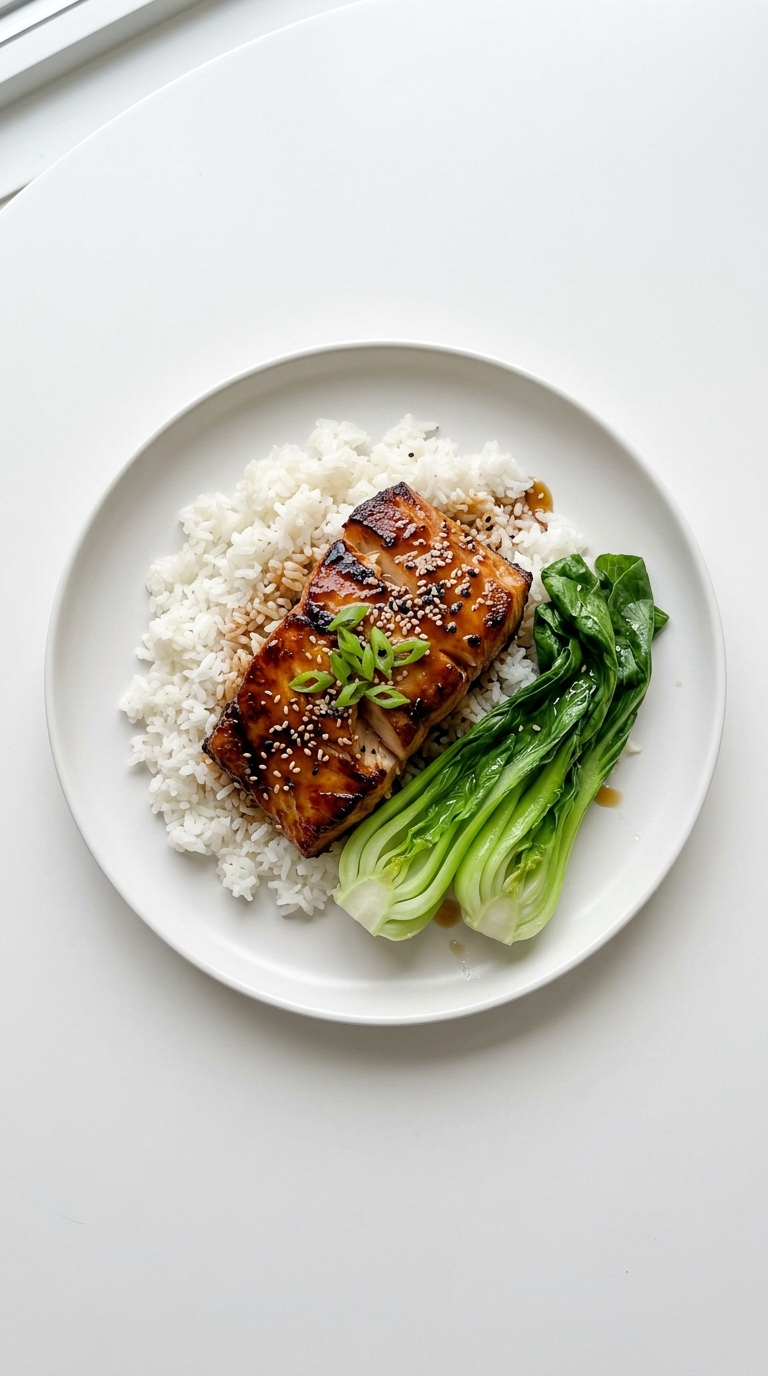
Honey Soy Miso Halibut
Tender baked halibut brushed with a glossy honey, soy, and miso glaze, served over rice with bok choy, green onions, and sesame seeds.
- Total Time: 34 minutes
- Yield: 4 servings 1x
Ingredients
- 4 halibut fillets, about 6 ounces each
- 3 tablespoons white miso paste
- 2 tablespoons honey
- 2 tablespoons low sodium soy sauce
- 1 tablespoon rice vinegar
- 1 teaspoon toasted sesame oil
- 1 teaspoon fresh ginger, grated
- 1 small garlic clove, finely grated
- 3 cups cooked white rice
- 4 cups bok choy, steamed or quickly sautéed
- 2 tablespoons green onions, thinly sliced
- 1 teaspoon sesame seeds
Instructions
- Preheat the oven to 400°F and line a baking dish with parchment paper or lightly grease it.
- In a small bowl, whisk together the white miso paste, honey, low sodium soy sauce, rice vinegar, toasted sesame oil, grated ginger, and grated garlic until smooth.
- Place the halibut fillets in the prepared baking dish with a little space between each piece.
- Spoon the glaze over the tops and sides of the fish, then let it sit for 15 to 20 minutes.
- Bake for 10 to 14 minutes, until the fish flakes easily with a fork and reaches 145°F in the center.
- Spoon a little pan glaze over the cooked fish, then sprinkle with green onions and sesame seeds.
- Serve warm over cooked white rice with bok choy on the side.
Notes
- Do not marinate the fish for too long because miso and soy sauce are strong.
- Use parchment paper to help prevent the honey glaze from sticking.
- Start checking the fish around 10 minutes because halibut can dry out quickly.
- For a gluten free version, use gluten free tamari instead of soy sauce.
- Prep Time: 20 minutes
- Cook Time: 14 minutes
- Category: Dinner
- Method: Baked
- Cuisine: Japanese-Inspired
- Diet: Low Fat
Nutrition
- Serving Size: 1 halibut fillet with rice and bok choy
- Calories: 395
- Sugar: 11g
- Sodium: 710mg
- Fat: 8g
- Saturated Fat: 1g
- Unsaturated Fat: 6g
- Trans Fat: 0g
- Carbohydrates: 43g
- Fiber: 3g
- Protein: 39g
- Cholesterol: 85mg
Keywords: miso halibut, glazed halibut, baked fish dinner, soy honey fish, easy seafood recipe