Teriyaki Salmon Pasta
There is something so comforting about a skillet full of glossy noodles, tender salmon, and bright ribbons of red pepper. The sauce clings to every strand, the salmon flakes softly into the pasta, and the whole dish smells sweet, savory, and just a little cozy. Trust me, you’re going to love this.
This is the kind of meal that feels special without acting complicated. You get the silky pull of pasta, the rich flavor of salmon, and that shiny teriyaki finish that makes every bite feel like it came from your favorite weeknight dinner spot.
A Saucy Weeknight Favorite That Feels Like Dinner Out
What makes this dish so easy to fall for is the way it brings comfort and bold flavor together in one pan. The noodles soak up the sweet and salty sauce, while the salmon adds a buttery richness that makes the whole meal feel satisfying.
And now let’s dive into where this flavor story comes from, because that teriyaki glaze has a little magic behind it.
A Little Teriyaki Story Before We Cook
Teriyaki is inspired by Japanese cooking, where the word often points to foods glazed with a shiny sauce made from soy sauce, sweetness, and gentle heat. Over time, home cooks around the world started using that flavor in all kinds of quick dinners, from rice bowls to noodles.
Pairing it with pasta gives the dish a fun fusion twist. It keeps the familiar comfort of spaghetti but adds a glossy, savory-sweet finish that makes it feel fresh and playful. Let me tell you, it’s worth every bite.
Why This Dish Earns a Spot in Your Dinner Rotation
Before we get into the pan, it helps to know why this recipe works so beautifully. It is practical, flexible, and still feels like something you would be happy to serve to friends.
Versatile: You can serve it as a cozy dinner, a quick lunch, or even a chilled noodle-style meal the next day. The flavors hold up beautifully.
Budget-Friendly: Salmon feels special, but using fillets and simple pantry sauces keeps the meal reasonable. Pasta stretches everything into generous servings.
Quick and Easy: The sauce comes together fast, the salmon cooks in minutes, and the pasta does most of the work for you.
Customizable: You can add more vegetables, adjust the sweetness, or make it spicy with a little chili sauce.
Crowd-Pleasing: The glossy noodles, tender fish, and familiar teriyaki flavor make it friendly for both pasta lovers and seafood fans.
Make-Ahead Friendly: You can mix the sauce ahead and slice the vegetables earlier in the day.
Great for Leftovers: The noodles reheat nicely with a splash of water, and the salmon stays tender if warmed gently.
Chef Tips for Glossy Noodles and Tender Salmon
Now that you know why this one works, let’s make sure it lands just right. This one’s a total game-changer when the salmon stays soft and the sauce coats the noodles instead of sitting at the bottom.
1. Cook the pasta just until al dente: The noodles will finish in the skillet with the sauce, so keep them slightly firm.
2. Pat the salmon dry first: A dry surface helps the fish sear better and keeps the texture delicate.
3. Do not boil the sauce hard: A gentle simmer keeps the teriyaki glaze smooth and glossy.
4. Save a little pasta water: It loosens the sauce and helps it cling to the noodles.
5. Add salmon near the end: Folding it in gently keeps the pieces from breaking down too much.
Kitchen Tools That Make This Recipe Smoother
With the tips in mind, let’s set up the kitchen. You do not need anything fancy, just a few reliable tools that help the cooking feel calm and easy.
Large pot: You need enough room for the spaghetti to cook evenly without clumping.
Large skillet: A wide skillet gives the salmon and vegetables space to cook, then lets you toss everything together.
Tongs: These make it easy to lift and turn the noodles into the sauce.
Small bowl: Perfect for whisking the teriyaki sauce before it hits the pan.
Sharp knife: A clean knife helps slice the red pepper and cut the salmon into neat pieces.
Measuring spoons and cups: These keep the sauce balanced, especially with soy sauce and honey.
Ingredients You Will Need for This Flavor-Packed Pasta
The beauty here is in the balance. The salmon brings richness, the peppers add color and sweetness, and the sauce wraps everything in that glossy, savory finish.
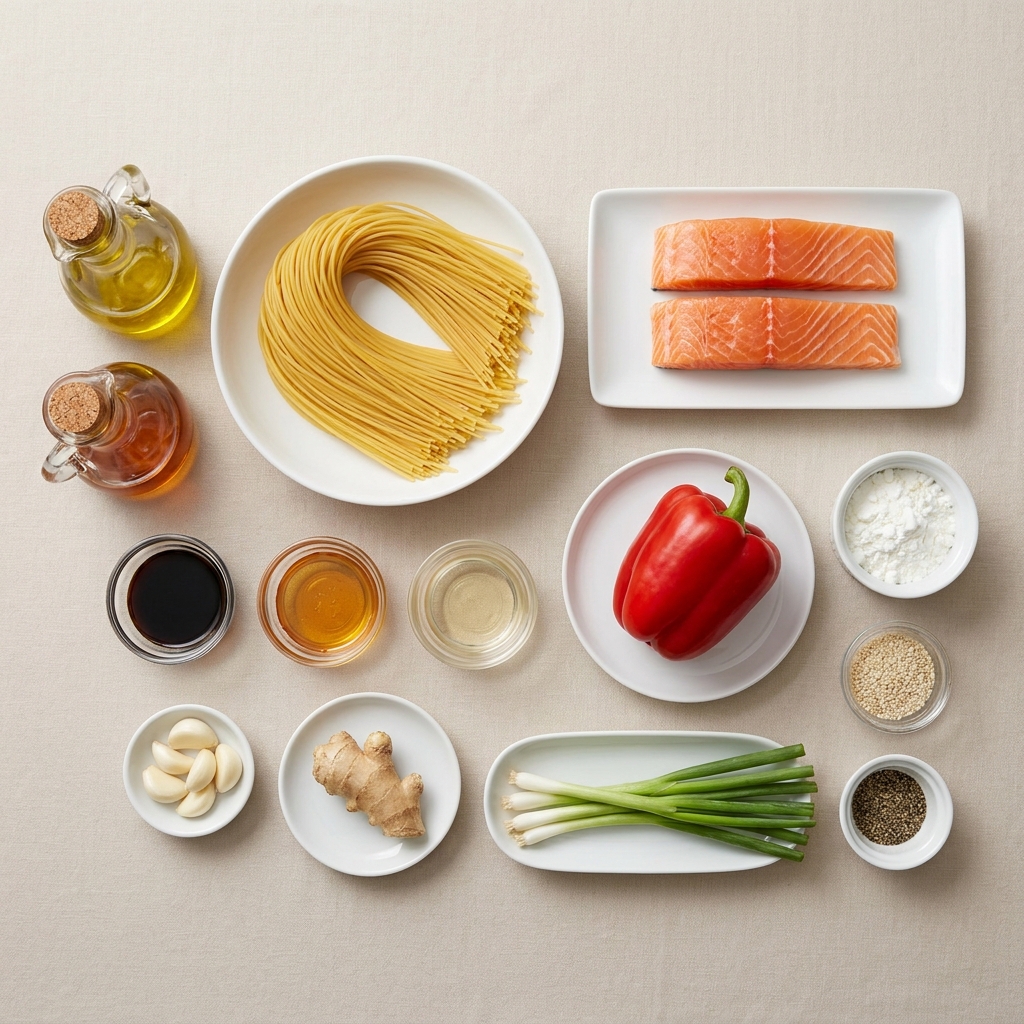
1. Spaghetti: 12 ounces, cooked until al dente, it gives the dish long, tender noodles that hold the sauce well.
2. Salmon fillets: 1 pound, skin removed and cut into bite-sized chunks, they add buttery flavor and satisfying protein.
3. Red bell pepper: 1 large, thinly sliced, it brings sweetness, color, and a little fresh crunch.
4. Olive oil: 1 tablespoon, used to cook the salmon and peppers without weighing the dish down.
5. Low-sodium soy sauce: 1/3 cup, it creates the savory base of the teriyaki-style glaze.
6. Honey: 3 tablespoons, it adds sweetness and helps the sauce turn glossy.
7. Rice vinegar: 1 tablespoon, it brightens the sauce so it does not taste too heavy.
8. Garlic: 3 cloves, minced, it adds warmth and deep savory aroma.
9. Fresh ginger: 1 teaspoon, grated, it gives the sauce a gentle zing.
10. Sesame oil: 1 teaspoon, added at the end for nutty fragrance.
11. Cornstarch: 1 teaspoon, mixed with 2 tablespoons water, it thickens the sauce lightly.
12. Green onions: 2, thinly sliced, they add a fresh finish.
13. Sesame seeds: 1 tablespoon, for a simple nutty topping.
14. Black pepper: 1/4 teaspoon, it gives the salmon a gentle savory edge.
Easy Ingredient Swaps for a Flexible Dinner
Once you see how the ingredients work together, it becomes easy to adjust the dish to what you already have.
Spaghetti: Linguine, fettuccine, or rice noodles.
Salmon: Trout or cooked shrimp.
Red bell pepper: Yellow bell pepper, snap peas, or broccoli florets.
Honey: Maple syrup or brown sugar.
Rice vinegar: Apple cider vinegar or fresh lime juice.
Low-sodium soy sauce: Tamari for a gluten-free option.
Green onions: Fresh cilantro or thinly sliced chives.
The Ingredients That Make the Sauce Shine
Before we cook, it is worth pausing for the two ingredients that really carry the flavor.
Salmon: Rich, tender, and naturally buttery, salmon works beautifully with a sweet and savory glaze because it can handle bold flavor without disappearing.
Honey Soy Glaze: The blend of soy sauce, honey, garlic, ginger, and vinegar creates that shiny coating that makes the noodles taste deeply seasoned in every bite.
Let’s Bring the Skillet to Life
Now comes the fun part. The kitchen starts smelling warm and savory, the noodles get glossy, and suddenly dinner feels much more exciting than the effort it took.
1. Preheat Your Equipment: Bring a large pot of salted water to a boil and warm a large skillet over medium heat.
2. Combine Ingredients: In a small bowl, whisk together the soy sauce, honey, rice vinegar, garlic, ginger, sesame oil, and the cornstarch mixed with water.
3. Prepare Your Cooking Vessel: Add olive oil to the skillet, then season the salmon chunks with black pepper.
4. Assemble the Dish: Cook the salmon for 2 to 3 minutes per side until just cooked through, then transfer it to a plate. In the same skillet, cook the sliced red bell pepper for 2 minutes.
5. Cook to Perfection: Boil the spaghetti until al dente, reserve 1/2 cup pasta water, then drain. Pour the sauce into the skillet with the peppers and simmer for 1 to 2 minutes until lightly thickened.
6. Finishing Touches: Add the pasta to the skillet and toss until coated. Add a splash of reserved pasta water if needed, then gently fold in the salmon.
7. Serve and Enjoy: Finish with green onions and sesame seeds, then serve warm while the noodles are glossy and fragrant.
How the Texture and Flavor Build Together
As the sauce warms, the honey rounds out the salty soy sauce while the vinegar keeps it bright. Garlic and ginger melt into the glaze, giving it that cozy aroma that makes everyone wander into the kitchen.
The pasta turns silky, the peppers stay lightly crisp, and the salmon brings soft, flaky pieces throughout. Every forkful has a little sweetness, a little saltiness, and a tender bite that makes this Teriyaki Salmon Pasta feel both comforting and lively.
Helpful Cooking Tips for Better Results
A few small moves can make the final dish taste brighter, smoother, and more balanced.
- Use low-sodium soy sauce: It gives you more control over saltiness.
- Reserve pasta water: It helps the sauce cling without making the pasta dry.
- Fold salmon gently: This keeps the chunks tender and pretty.
- Taste before serving: Add a tiny splash of vinegar if the sauce feels too sweet.
Common Mistakes to Avoid for the Best Skillet Pasta
This is a friendly recipe, but a few little things can change the texture. No stress, here is how to keep it on track.
- Overcooking the salmon: Cook it just until it flakes, then let it rest before folding it back in.
- Skipping the cornstarch slurry: The sauce may taste good but will not coat the noodles as nicely.
- Adding too much pasta water at once: Start with a splash, toss, then add more only if needed.
- Boiling the sauce too aggressively: Keep it at a simmer so it stays smooth and glossy.
Nutrition Facts, A Cozy Estimate
Servings: 4
Calories per serving: 540
Note: These are approximate values.
Time Needed Before Dinner Hits the Table
Prep Time: 15 minutes
Cook Time: 20 minutes
Total Time: 35 minutes
Make-Ahead and Storage Tips for Easy Meals Later
If you want to make dinner feel even easier, whisk the sauce ahead and keep it in the fridge for up to 3 days. You can also slice the bell pepper and green onions ahead so the cooking moves quickly.
Store leftovers in an airtight container in the fridge for up to 3 days. To reheat, warm gently in a skillet with a splash of water to loosen the sauce. Freezing is not the best choice because cooked pasta and salmon can lose their tender texture, but refrigerated leftovers are still delicious.
How to Serve This Glossy Salmon Pasta
Serve it warm in shallow bowls with extra green onions and sesame seeds on top. A crisp cucumber salad, steamed broccoli, or roasted asparagus makes a fresh side.
For a fuller dinner, add a simple bowl of miso soup or a citrusy slaw. The freshness balances the glossy noodles and makes the plate feel complete.
Creative Ways to Use Leftovers
Leftovers can become something new with almost no effort. Toss the cold pasta with shredded lettuce and cucumber for a chilled noodle salad, or warm it in a skillet and top it with a soft fried egg.
You can also turn it into a quick lunch bowl by adding steamed vegetables and a little extra soy sauce or lime juice to wake everything back up.
Additional Tips for Flavor and Freshness
For deeper flavor, let the salmon sit with a spoonful of the sauce for 10 minutes before cooking. Just keep the rest of the sauce separate so it can thicken properly in the skillet.
Fresh ginger makes a big difference here, but ground ginger can work in a pinch. Use a light hand, because dried ginger tastes stronger and less juicy than fresh.
Make It a Showstopper on the Table
To make this pasta look extra inviting, twirl the noodles into bowls instead of piling them in. Place the salmon pieces where they can be seen, then scatter green onions and sesame seeds over the top.
A few bright red pepper slices on the surface make the whole dish look colorful and fresh. It is simple, but it makes the bowl feel restaurant-worthy.
Variations to Try Next Time
1. Spicy Teriyaki Version: Add 1 to 2 teaspoons chili garlic sauce to the glaze for heat.
2. Veggie-Loaded Version: Add broccoli, snap peas, or mushrooms with the bell pepper.
3. Creamy Twist: Stir in 2 tablespoons cream cheese at the end for a softer, richer sauce.
4. Citrus Ginger Version: Add 1 teaspoon orange zest to the sauce for a bright pop.
5. Gluten-Free Option: Use tamari and gluten-free pasta or rice noodles.
FAQ’s
Q1: Can I use frozen salmon?
A1: Yes, thaw it fully and pat it dry before cooking so it sears instead of steaming.
Q2: Can I make this with leftover cooked salmon?
A2: Yes, add it at the end just long enough to warm through.
Q3: Is this dish very sweet?
A3: It has a gentle sweetness, but the soy sauce, vinegar, garlic, and ginger keep it balanced.
Q4: Can I use bottled teriyaki sauce?
A4: Yes, use about 1/2 cup, then loosen it with pasta water if it feels too thick.
Q5: What pasta shape works best?
A5: Spaghetti, linguine, and fettuccine work beautifully because they hold the glossy sauce.
Q6: Can I add more vegetables?
A6: Absolutely. Broccoli, snap peas, zucchini, and mushrooms all fit nicely.
Q7: How do I keep salmon from falling apart?
A7: Cook it first, set it aside, then fold it in gently at the end.
Q8: Can I make this gluten-free?
A8: Yes, use gluten-free pasta and tamari instead of soy sauce.
Q9: Can I serve it cold?
A9: Yes, it works as a chilled noodle salad, especially with cucumber and extra green onions.
Q10: How do I refresh leftovers?
A10: Reheat gently with a splash of water, then taste and add a tiny splash of soy sauce or vinegar if needed.
Conclusion
Teriyaki Salmon Pasta is one of those dinners that feels bright, cozy, and satisfying all at once. The noodles turn glossy, the salmon stays tender, and the sauce brings everything together with sweet, savory flavor. Make it once, and it just might become the quick skillet dinner you keep coming back to.
Print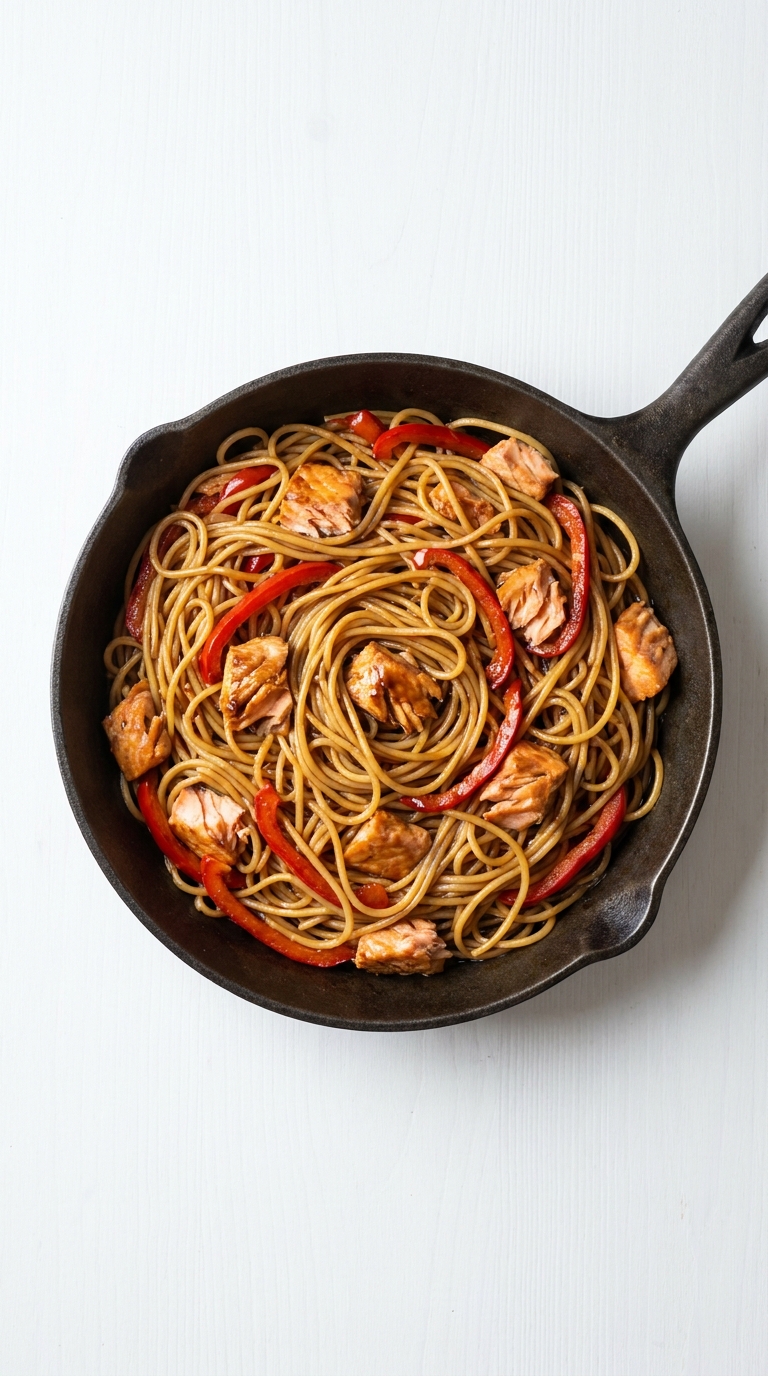
Teriyaki Salmon Pasta
A glossy, savory-sweet pasta dinner made with tender salmon chunks, spaghetti, red bell pepper, and a quick homemade teriyaki-style sauce.
- Total Time: 35 minutes
- Yield: 4 servings 1x
Ingredients
- 12 ounces spaghetti
- 1 pound salmon fillets, skin removed and cut into bite-sized chunks
- 1 large red bell pepper, thinly sliced
- 1 tablespoon olive oil
- 1/3 cup low-sodium soy sauce
- 3 tablespoons honey
- 1 tablespoon rice vinegar
- 3 cloves garlic, minced
- 1 teaspoon fresh ginger, grated
- 1 teaspoon sesame oil
- 1 teaspoon cornstarch mixed with 2 tablespoons water
- 2 green onions, thinly sliced
- 1 tablespoon sesame seeds
- 1/4 teaspoon black pepper
Instructions
- Bring a large pot of salted water to a boil and warm a large skillet over medium heat.
- In a small bowl, whisk together the soy sauce, honey, rice vinegar, garlic, ginger, sesame oil, and the cornstarch mixed with water.
- Add olive oil to the skillet and season the salmon chunks with black pepper.
- Cook the salmon for 2 to 3 minutes per side until just cooked through, then transfer it to a plate. In the same skillet, cook the sliced red bell pepper for 2 minutes.
- Boil the spaghetti until al dente, reserve 1/2 cup pasta water, then drain.
- Pour the sauce into the skillet with the peppers and simmer for 1 to 2 minutes until lightly thickened.
- Add the pasta to the skillet and toss until coated, adding a splash of reserved pasta water if needed.
- Gently fold in the salmon, then finish with green onions and sesame seeds before serving warm.
Notes
- Use low-sodium soy sauce to keep the sauce balanced.
- Fold the salmon in gently so the pieces stay tender.
- Add pasta water slowly until the sauce coats the noodles smoothly.
- For a spicy version, add 1 to 2 teaspoons chili garlic sauce to the glaze.
- Prep Time: 15 minutes
- Cook Time: 20 minutes
- Category: Dinner
- Method: Stovetop
- Cuisine: Asian-inspired
- Diet: Low Lactose
Nutrition
- Serving Size: 1 bowl
- Calories: 540
- Sugar: 15g
- Sodium: 720mg
- Fat: 18g
- Saturated Fat: 3g
- Unsaturated Fat: 14g
- Trans Fat: 0g
- Carbohydrates: 62g
- Fiber: 3g
- Protein: 32g
- Cholesterol: 62mg
Keywords: teriyaki salmon pasta, salmon pasta, teriyaki noodles, easy salmon dinner, weeknight pasta